
Tech
Duelbits Taken Offline After $7 Million Cryptocurrency Hack

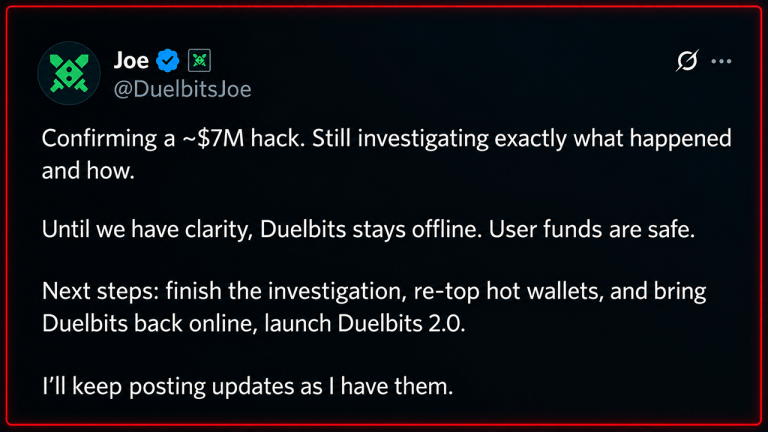
Duelbits, a cryptocurrency-funded online casino, has taken its platform offline after confirming that hackers removed approximately $7 million in digital assets from wallets used to process transactions.
The platform’s founder, who identifies himself as Joe, confirmed the incident on Thursday. He said the stolen funds came from Duelbits’ hot wallets, which are internet-connected wallets commonly used by crypto businesses to handle deposits, withdrawals and other day-to-day transfers. The casino has not indicated that its services will resume on a specific timetable, saying the site will remain unavailable while the incident is investigated.
The shutdown means users are currently unable to access the platform as Duelbits works to determine how the attackers entered its systems, which assets were affected and whether any other parts of its infrastructure were compromised. No further details about the suspected hackers, the exact timing of the theft or the movement of the funds were provided in the information released by the company.
Hot wallets are necessary for businesses that need to process cryptocurrency quickly, but their connection to the internet also makes them a frequent target for attackers. Unlike offline or “cold” storage, which is kept disconnected from online systems for much of the time, hot wallets are designed for operational liquidity. That convenience can expose them to risks involving stolen credentials, compromised software, unauthorized access or weaknesses in transaction controls.
The Duelbits incident therefore highlights a familiar security challenge for crypto-related companies. Platforms that hold customer or operating funds in online wallets must balance the need for immediate access with measures intended to limit potential losses. Common safeguards include keeping only a portion of assets online, using multiple approvals for transfers, separating administrative privileges and monitoring transactions for unusual activity. The source of the breach at Duelbits has not been established publicly.
The company’s decision to suspend operations reflects the uncertainty that typically follows a major digital-asset theft. A platform may need to freeze withdrawals and deposits while specialists review wallet activity, examine server and account logs, identify affected systems and establish whether the attacker still has access. Investigators may also attempt to trace the stolen cryptocurrency as it moves across blockchain addresses or through services that can make recovery more difficult.
The value cited by Duelbits is an estimate based on the digital assets involved and their market prices. Cryptocurrency losses can fluctuate in dollar terms after a theft because token prices may rise or fall before the funds are identified or recovered. The assets themselves may also be divided among multiple addresses, converted into other tokens or routed through various blockchain networks, complicating efforts to follow them.
For customers, the outage leaves important questions unanswered, including the status of balances, pending withdrawals and any other funds held through the platform. Duelbits has not publicly stated whether customer accounts were directly affected, whether the stolen assets belonged to the company or users, or whether it has identified a plan for reimbursements. Those matters are likely to depend on the findings of the investigation and on the company’s own records of wallet ownership and account liabilities.
Crypto casinos operate at the intersection of online gambling and digital finance, making them exposed to risks associated with both industries. Their businesses often rely on rapid transfers and blockchain-based payments, while the irreversible nature of many cryptocurrency transactions can make errors or unauthorized withdrawals difficult to undo. Unlike conventional card payments, crypto transfers generally cannot be canceled by a bank once they have been confirmed on a network.
The sector has also drawn sustained attention from security researchers and regulators because large pools of digital assets can be attractive targets. A successful attack may involve more than the theft itself. Companies must also assess whether customer data, internal credentials or third-party services were affected, and they may face operational, legal and reputational consequences even when the initial loss is limited to a particular wallet.
At present, Duelbits has confirmed the approximate size of the loss and the suspension of its service, but it has not released a detailed technical account of the breach. The platform’s founder has said the company is investigating, leaving the circumstances of the attack and the prospects for recovery unresolved.
Until that review is completed, Duelbits users are likely to be left waiting for information about access to their accounts and the handling of outstanding transactions. The case will also provide a further test of how a crypto-based gambling platform responds when the wallet infrastructure supporting its business becomes the center of a multimillion-dollar security incident.


Mastercard Extends Stablecoin Payments to Millions of Retail Checkout Points

Ledger Outlines Plans to Turn Its Crypto Hardware Wallet Into a Smartphone

21shares Strategist Sees Bitcoin Advancing Toward $90,000 After Hotter CPI Reading

Gaming Technologies of the New Time!

Calls for Enhanced Discussion on Bitcoin as Brazil’s Reserve Asset: A Move Towards ‘Internet’s Gold’

Bitcoin Declines Below $80K: deVere CEO Nigel Green Remains Bullish on Long-Term Outlook Following Strategic U.S. Bitcoin Reserve Announcement
-
 Press Releases2 years ago
Gaming Technologies of the New Time!
-
 Altcoins2 years ago
Calls for Enhanced Discussion on Bitcoin as Brazil’s Reserve Asset: A Move Towards ‘Internet’s Gold’
-
 Altcoins2 years ago
Bitcoin Declines Below $80K: deVere CEO Nigel Green Remains Bullish on Long-Term Outlook Following Strategic U.S. Bitcoin Reserve Announcement
-

 Bitcoin2 years ago
Bitcoin Surges Past $64K as SEI and POPCAT Lead Daily Crypto Gains on September 25
-

 Bitcoin1 year ago
Peter Schiff เตือนนักลงทุนคริปโตขาย Ethereum (ETH) เพื่อซื้อ Bitcoin ชี้ ETH มีศักยภาพจำกัด
-

 Press Releases2 years ago
Evo Exchange: Redefining the Decentralized Exchange Landscape
-

 Bitcoin1 year ago
Grayscale Investments Submits Draft Registration for IPO, Aiming for Public Trading in U.S.
-

 Press Releases2 years ago
CODE, a Newly Born Project Brings Decentralization Back to the Main Menu