
Bitcoin
Mastercard Extends Stablecoin Payments to Millions of Retail Checkout Points

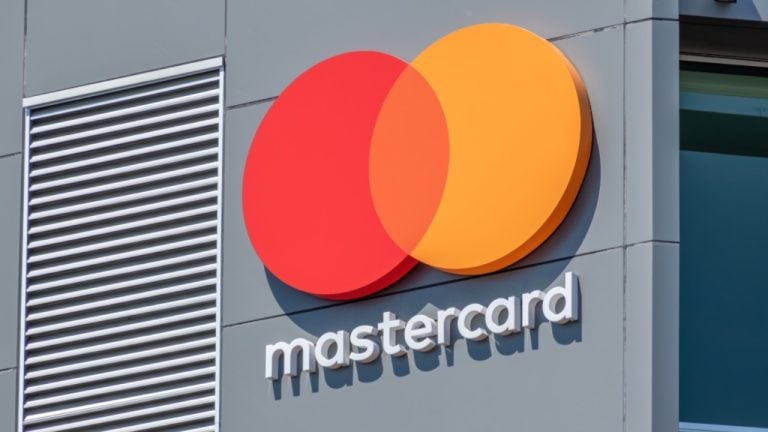
Mastercard is expanding the role of stablecoins in everyday payments through a new platform developed with BVNK, a payments infrastructure company focused on digital assets. The arrangement is designed to let consumers spend stablecoin balances at hundreds of millions of merchant locations that already accept Mastercard, while giving businesses the option of receiving traditional currency through the same payment flow.
The service is intended to bridge two systems that have largely operated separately. Stablecoins are digital tokens designed to maintain a relatively stable value, commonly by tracking a fiat currency such as the U.S. dollar. They have become increasingly important in cryptocurrency markets and cross-border transfers, but their use at ordinary retail checkouts has remained limited. Mastercard and BVNK are seeking to address that gap by connecting stablecoin balances to an established card network rather than requiring merchants to adopt cryptocurrency infrastructure themselves.
Under the planned arrangement, a customer’s digital-dollar balance can be used to fund a Mastercard transaction. The merchant does not need to hold stablecoins or change its existing checkout process. Instead, the payment can be converted into the currency used by the merchant, while the transaction continues through Mastercard’s global acceptance network. This structure is intended to make the underlying digital-asset component largely invisible at the point of sale.
The platform will combine traditional currencies and stablecoins through a single integration. That design could be particularly relevant for companies operating across multiple markets, where moving money between banks, payment providers and customers can involve separate systems and settlement procedures. Mastercard said the offering will support card issuing in more than 130 countries and include bank payouts, creating additional routes for funds to move between digital wallets, cards and conventional bank accounts.
For consumers, the main change would be the ability to use stablecoin holdings for ordinary purchases without first manually converting them through a cryptocurrency exchange or transferring them to a bank account. A card linked to the platform could allow a user to draw on a stablecoin balance wherever Mastercard is accepted, subject to the terms and availability of the issuing provider. For merchants, the model is designed to preserve familiar settlement in local or preferred fiat currency.
The partnership comes as payment companies and financial institutions continue to test ways of using blockchain-based assets without requiring the public to navigate the technical complexity associated with digital wallets and token transfers. Stablecoins have attracted attention because they are intended to combine some of the programmability and transferability of blockchain networks with a value that is less volatile than assets such as bitcoin or ether.
Their use, however, has also raised questions about regulation, reserves, consumer protection and the responsibilities of companies involved in issuing, holding and moving the tokens. The operation of a stablecoin payment service can involve several parties, including the issuer of the token, the wallet or platform holding the customer’s balance, the card issuer, the payment network and the merchant’s acquirer. How those roles are allocated can affect transaction monitoring, dispute handling, compliance and the treatment of customer funds.
Mastercard’s partnership with BVNK places the card network in the middle of that developing ecosystem. Rather than presenting stablecoins as a replacement for conventional payments, the initiative uses them as another source of funds that can be connected to the existing card system. That approach reflects the practical challenge facing digital-asset payments: consumers may hold tokens, but merchants generally need predictable settlement, established fraud controls and compatibility with their current point-of-sale arrangements.
The offering may also appeal to businesses serving customers in countries where moving money internationally can be slow or expensive. Stablecoins can be transferred on blockchain networks at times when traditional payment systems are unavailable or less efficient, although the overall cost and speed depend on the network, the service provider and the conversion process. By adding bank payouts and support for card issuance across a broad group of markets, the Mastercard-BVNK platform is intended to connect those transfers with more conventional financial channels.
The announcement does not mean that every Mastercard transaction will automatically accept stablecoins, nor does it eliminate the need for local regulatory approvals or participating financial institutions. Availability will depend on the jurisdictions in which the service is offered, the stablecoins supported by the platform and the institutions responsible for issuing cards and processing payouts. Those details are likely to shape how quickly the system reaches consumers and businesses.
Still, the partnership represents a significant step in the effort to make digital-dollar balances usable beyond crypto trading platforms. Mastercard already provides the merchant reach and payment infrastructure; BVNK contributes technology intended to connect stablecoins with banking and payment services. Together, the companies are positioning the platform as an intermediary between blockchain-based money and the conventional retail economy.
The service was announced on Oct. 15. If adopted widely, it could give stablecoins a more routine role in consumer spending while allowing merchants to continue receiving payments through familiar channels. Its success will ultimately depend on practical factors such as reliability, fees, regulatory treatment and the willingness of card issuers, businesses and customers to use digital-dollar balances in everyday transactions.


Mastercard Extends Stablecoin Payments to Millions of Retail Checkout Points

Ledger Outlines Plans to Turn Its Crypto Hardware Wallet Into a Smartphone

21shares Strategist Sees Bitcoin Advancing Toward $90,000 After Hotter CPI Reading

Gaming Technologies of the New Time!

Calls for Enhanced Discussion on Bitcoin as Brazil’s Reserve Asset: A Move Towards ‘Internet’s Gold’

Bitcoin Declines Below $80K: deVere CEO Nigel Green Remains Bullish on Long-Term Outlook Following Strategic U.S. Bitcoin Reserve Announcement
-
 Press Releases2 years ago
Gaming Technologies of the New Time!
-
 Altcoins2 years ago
Calls for Enhanced Discussion on Bitcoin as Brazil’s Reserve Asset: A Move Towards ‘Internet’s Gold’
-
 Altcoins2 years ago
Bitcoin Declines Below $80K: deVere CEO Nigel Green Remains Bullish on Long-Term Outlook Following Strategic U.S. Bitcoin Reserve Announcement
-

 Bitcoin2 years ago
Bitcoin Surges Past $64K as SEI and POPCAT Lead Daily Crypto Gains on September 25
-
 Bitcoin1 year ago
Peter Schiff เตือนนักลงทุนคริปโตขาย Ethereum (ETH) เพื่อซื้อ Bitcoin ชี้ ETH มีศักยภาพจำกัด
-

 Press Releases2 years ago
Evo Exchange: Redefining the Decentralized Exchange Landscape
-

 Bitcoin1 year ago
Grayscale Investments Submits Draft Registration for IPO, Aiming for Public Trading in U.S.
-

 Press Releases2 years ago
CODE, a Newly Born Project Brings Decentralization Back to the Main Menu