
Altcoins
Bessent Says Cryptocurrency Could Help Preserve the U.S. Dollar’s Global Dominance

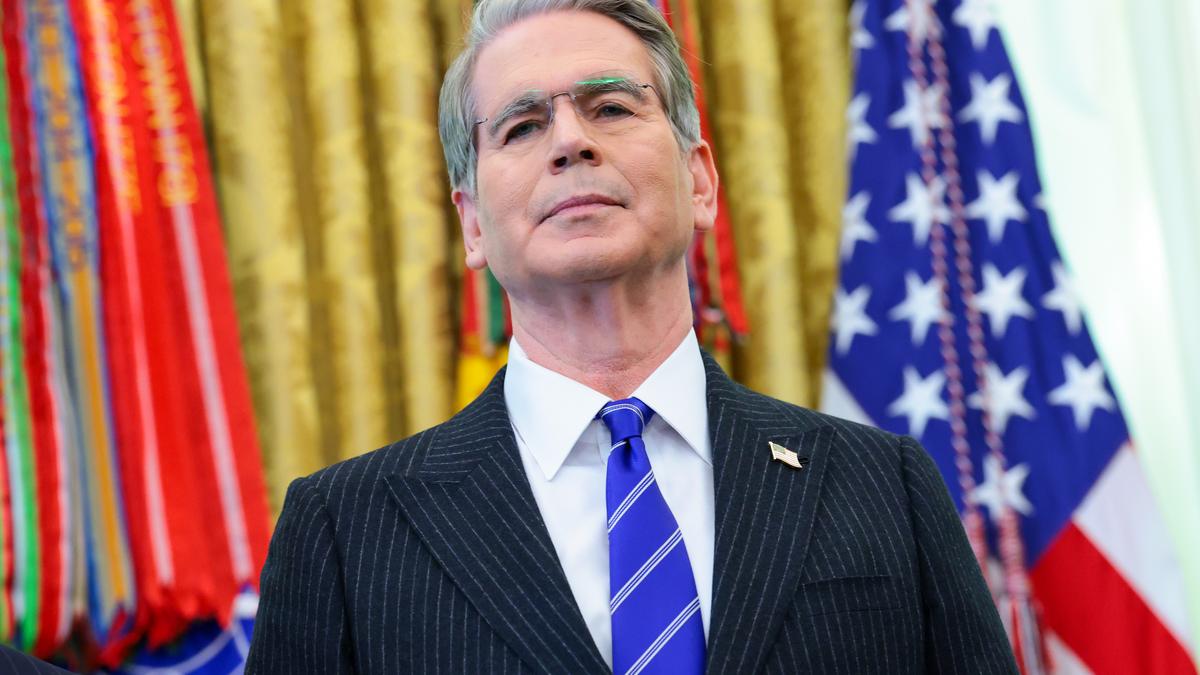
U.S. Treasury Secretary Scott Bessent has presented digital assets as a potential instrument for reinforcing the dollar’s global standing, arguing that cryptocurrency policy could become part of a broader effort to preserve American influence in international finance.
Speaking at a conference hosted by Ripple, Bessent pointed to regulatory action by the Securities and Exchange Commission and the Commodity Futures Trading Commission as a possible way to address uncertainty in the crypto market. His comments came after the failure of the Clarity Act, legislation that had been expected to establish a more defined framework for digital assets in the United States.
Without that legislation, responsibility for shaping the industry’s rules may increasingly fall to financial regulators. Bessent indicated that coordinated steps by the SEC and CFTC could help close some of the regulatory gap, offering businesses and investors clearer expectations even in the absence of a comprehensive congressional measure.
The secretary also highlighted the problem commonly described as crypto “debanking,” in which digital-asset companies or participants struggle to obtain or retain access to traditional banking services. The issue has become a major concern for the industry, which says that banks have at times been reluctant to serve crypto-related businesses because of regulatory uncertainty, compliance risks and political scrutiny.
Bessent’s remarks place the debate over digital-asset regulation within a larger discussion about the future of the dollar. The United States has long benefited from the dollar’s role as the dominant currency for global trade, financial reserves and cross-border transactions. Maintaining that position has traditionally depended on the depth of U.S. capital markets, the stability of American institutions and the widespread use of dollar-based financial infrastructure.
Supporters of digital assets believe blockchain networks and dollar-linked stablecoins could extend that influence into new forms of payment and settlement. Stablecoins, which are designed to maintain a relatively consistent value against assets such as the U.S. dollar, have become one of the most important links between traditional finance and the cryptocurrency market. Their supporters argue that wider use of dollar-backed digital tokens could increase demand for dollar assets and make the currency more accessible in global markets.
That argument is central to the view that crypto could serve American economic interests rather than operate solely as an alternative to the existing financial system. If digital assets are developed within a U.S. regulatory framework, proponents say, American companies and financial institutions could remain at the center of a rapidly changing payments ecosystem. They also contend that clear rules would encourage innovation at home instead of pushing developers, exchanges and investors toward jurisdictions with more predictable policies.
The failure of the Clarity Act has complicated that outlook. The legislation was intended to address questions about how digital assets should be classified and which federal agency should oversee different parts of the market. The SEC generally regulates securities markets, while the CFTC oversees commodity derivatives and has traditionally played a role in supervising commodity markets. Digital assets often do not fit neatly into those categories, creating disputes over jurisdiction and enforcement.
The lack of a settled framework has produced uncertainty for crypto companies, investors and banks. Firms may face enforcement action if regulators later determine that a particular token or service falls under rules they did not believe applied. Banks, meanwhile, can view relationships with crypto businesses as carrying additional legal and reputational risks. That dynamic can restrict access to payment networks and other essential financial services, even when companies are attempting to comply with existing requirements.
Bessent’s call for regulatory action suggests that the administration may view agency coordination as a practical interim response. Such a move would not necessarily replace legislation, but it could provide guidance while lawmakers reconsider how to regulate digital assets. The approach could also test whether the SEC and CFTC can reduce overlapping or conflicting demands without a new statutory framework.
The secretary’s appearance at a Ripple event is notable because the company has spent years engaged in a legal and regulatory dispute over the treatment of its digital token and related transactions. Ripple has made regulatory clarity a central part of its public position, arguing that unclear rules disadvantage U.S. businesses and drive activity overseas. Bessent’s remarks, as described at the conference, align with the broader industry appeal for more consistent oversight, though they do not by themselves establish new policy.
There are still significant questions about how crypto can support the dollar without creating new risks. Regulators must consider consumer protection, market manipulation, financial stability, money laundering and the possibility that poorly supervised digital-asset markets could weaken confidence in the financial system. Stablecoins also raise questions about the quality and liquidity of the reserves backing them, as well as the circumstances under which holders can redeem their tokens for conventional currency.
Those challenges help explain why Congress has sought to define the responsibilities of financial regulators. They also make the regulatory response important to both the crypto industry and the broader financial system. A framework that is viewed as too restrictive could discourage innovation in the United States, while rules that are too permissive could expose consumers and institutions to avoidable losses.
Bessent’s comments therefore signal a broader policy debate rather than a finished regulatory plan. By linking digital assets to the dollar’s international role and calling attention to debanking, the Treasury secretary framed cryptocurrency as an issue of economic competitiveness, not merely a question of speculative investment. The next steps by the SEC, CFTC, Congress and the banking sector will determine whether that vision develops into a durable part of America’s financial strategy.

Bessent Says Cryptocurrency Could Help Preserve the U.S. Dollar’s Global Dominance
Bitcoin Faces Key Test as Big Tech Earnings, Fed Decision and Inflation Data Approach
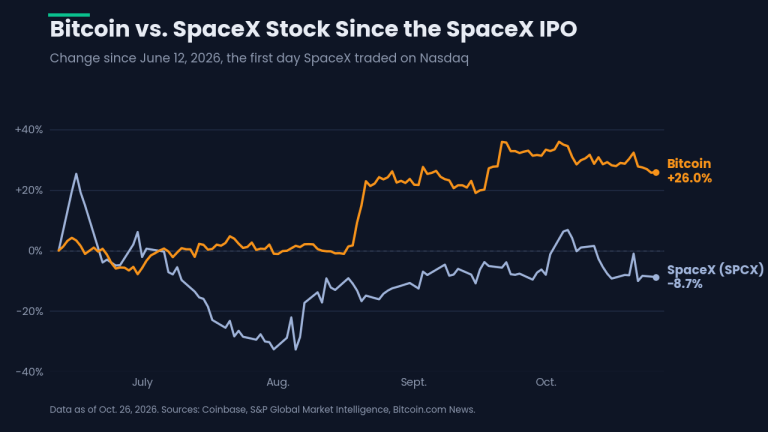
Bitcoin Gains 26% Since SpaceX Debut as Anthropic IPO Expectations Build

Gaming Technologies of the New Time!

Calls for Enhanced Discussion on Bitcoin as Brazil’s Reserve Asset: A Move Towards ‘Internet’s Gold’

Bitcoin Declines Below $80K: deVere CEO Nigel Green Remains Bullish on Long-Term Outlook Following Strategic U.S. Bitcoin Reserve Announcement
-
 Press Releases2 years ago
Gaming Technologies of the New Time!
-
 Altcoins2 years ago
Calls for Enhanced Discussion on Bitcoin as Brazil’s Reserve Asset: A Move Towards ‘Internet’s Gold’
-
 Altcoins2 years ago
Bitcoin Declines Below $80K: deVere CEO Nigel Green Remains Bullish on Long-Term Outlook Following Strategic U.S. Bitcoin Reserve Announcement
-

 Bitcoin1 year ago
Peter Schiff เตือนนักลงทุนคริปโตขาย Ethereum (ETH) เพื่อซื้อ Bitcoin ชี้ ETH มีศักยภาพจำกัด
-

 Bitcoin2 years ago
Bitcoin Surges Past $64K as SEI and POPCAT Lead Daily Crypto Gains on September 25
-

 Bitcoin1 year ago
Strategy ขยายการถือครองบิตคอยน์สู่ 580,955 BTC หลังจากการซื้อใหม่มูลค่าหลายล้านดอลลาร์
-

 Press Releases2 years ago
Evo Exchange: Redefining the Decentralized Exchange Landscape
-

 Altcoins2 years ago
FBI เชื่อมโยงนักแสดงเกาหลีเข้ากับการแฮ็ก DMM Exchange มูลค่า 308 ล้านดอลลาร์