
Altcoins
a16z Removes “Crypto” Label From Flagship Fund as Investment Strategy Shifts

Andreessen Horowitz is broadening the identity of its technology investment business, replacing the “a16z Crypto” label with “a16z Frontier” as it looks beyond blockchain and digital assets to a wider group of emerging technologies.
The shift places artificial intelligence, autonomous machines and new computing devices alongside blockchain-related opportunities within the firm’s forward-looking investment focus. It represents a significant change in how the business presents itself to entrepreneurs and investors, moving from a sector-specific brand toward one designed to cover several technology frontiers at once.
The rebranding does not, on the information available, amount to an announcement that a16z is abandoning crypto. Instead, it suggests that the firm no longer wants its emerging-technology strategy to be defined primarily by the blockchain industry. Crypto had become a prominent part of venture capital’s technology landscape over the past decade, but the sector has also experienced sharp cycles of enthusiasm, declining valuations and regulatory uncertainty. A broader identity may allow the firm to pursue opportunities across adjacent fields without being tied to a single market label.
Under the new Frontier name, the firm plans to examine technologies that could alter how people interact with computers, machines and digital networks. Artificial intelligence is central to that landscape, ranging from software systems and machine-learning infrastructure to products that use AI as a core interface. Autonomous machines represent another major area of interest, encompassing systems capable of sensing their surroundings, making decisions and carrying out tasks with limited human control.
New computing devices also form part of the expanded remit. That category may include hardware and interfaces that change the way computing is experienced, although the available announcement does not provide a detailed list of targeted products or companies. The inclusion of devices alongside AI and autonomous systems points to an investment thesis that extends beyond software alone and considers how new technologies may be embedded in the physical world.
For a venture firm, branding is more than a cosmetic exercise. It can influence the kinds of founders who approach the partnership, the sectors that receive attention and the way limited partners understand the investment strategy. A crypto-specific name naturally signals expertise in blockchain networks, tokens, decentralized applications and related infrastructure. A Frontier identity communicates a wider interest in technologies that are still developing and may not yet fit neatly into established categories.
That distinction matters as the boundaries between technology sectors become less clear. AI companies increasingly depend on specialized chips, data infrastructure and new forms of computing. Autonomous systems combine robotics, software, sensors and machine learning. Blockchain projects can intersect with identity, financial infrastructure, data ownership and other areas that overlap with broader technology themes. A more expansive platform could give investors greater flexibility to assess such companies according to the problem they are solving rather than the industry label attached to them.
The decision also reflects a changing venture-capital environment. Crypto investment surged during periods of rising token prices and intense interest in decentralized technology, attracting dedicated funds and corporate investment. The market later endured a severe downturn, with the collapse of major companies and projects exposing risks involving leverage, governance and regulation. Although blockchain development has continued, the sector’s public image and financing conditions have been more volatile than those of many conventional software categories.
At the same time, AI has become one of the most competitive areas in private technology investment. Investors have directed substantial attention toward foundation models, AI applications, computing infrastructure and the hardware required to run increasingly capable systems. Robotics and autonomous technologies have also gained momentum as improvements in sensors, processors and machine learning make more complex systems possible. By grouping these areas under a single banner, a16z can position its emerging-technology operation around a broader set of long-term bets.
The move may also help the firm speak to founders whose companies do not fit within the traditional crypto definition. A startup building an autonomous device, an AI-native product or a new computing interface might previously have viewed a crypto-branded investment group as outside its natural network, even if its technology shared infrastructure or talent with blockchain companies. The Frontier name removes some of that limitation and presents the team as a potential partner for a wider range of businesses.
Details about how the reorganization will affect existing crypto investments, personnel or capital allocations were not provided in the source announcement. There is also no indication that the change automatically alters the firm’s investment commitments to blockchain companies. The clearest message is strategic: a16z wants its frontier-technology operation to reflect a larger opportunity set than crypto alone.
The change illustrates how major technology investors are adapting their language as innovation moves across traditional boundaries. Blockchain, AI, robotics and advanced computing are often discussed as separate industries, yet companies working in these fields increasingly share technical foundations, infrastructure needs and commercial challenges. For a16z, the transition from Crypto to Frontier is an effort to capture that convergence while keeping its focus on technologies it believes could define the next phase of computing and automation.

a16z Removes “Crypto” Label From Flagship Fund as Investment Strategy Shifts
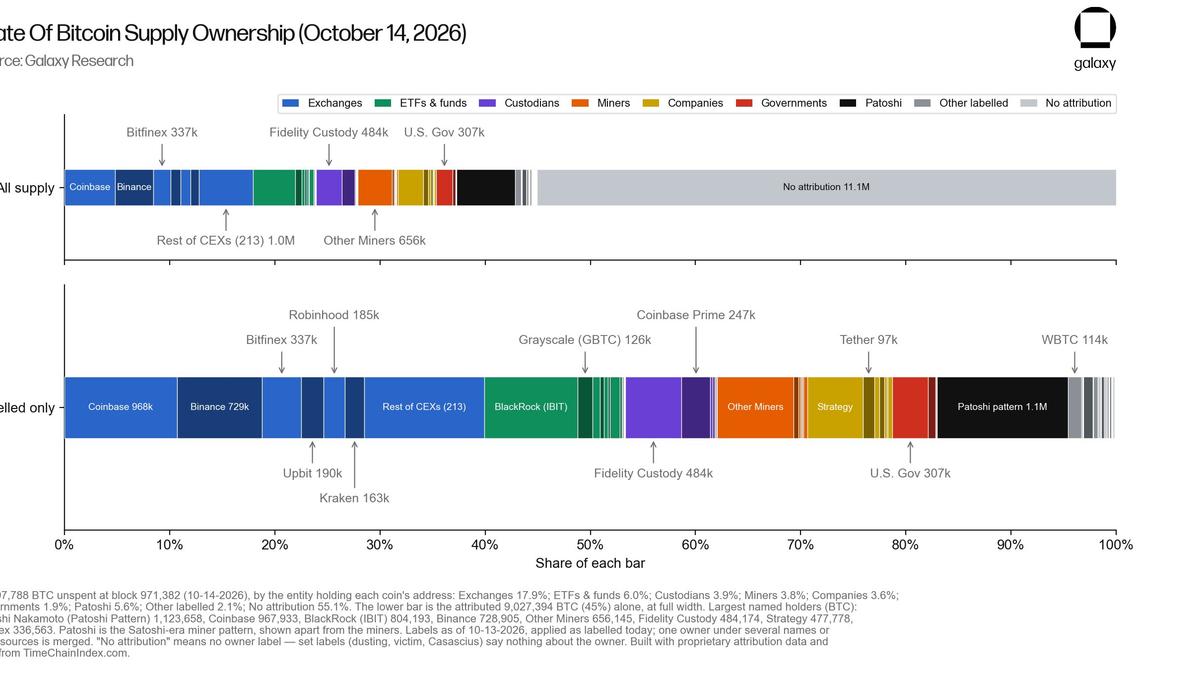
Bitcoin: More Than 11 Million Coins Have No Identified Owner

Beyond Crypto Trading: How PLUS Mainnet Is Building Toward the Next Phase of Blockchain Finance

Gaming Technologies of the New Time!

Calls for Enhanced Discussion on Bitcoin as Brazil’s Reserve Asset: A Move Towards ‘Internet’s Gold’

Bitcoin Declines Below $80K: deVere CEO Nigel Green Remains Bullish on Long-Term Outlook Following Strategic U.S. Bitcoin Reserve Announcement
-
 Press Releases2 years ago
Gaming Technologies of the New Time!
-
 Altcoins2 years ago
Calls for Enhanced Discussion on Bitcoin as Brazil’s Reserve Asset: A Move Towards ‘Internet’s Gold’
-
 Altcoins2 years ago
Bitcoin Declines Below $80K: deVere CEO Nigel Green Remains Bullish on Long-Term Outlook Following Strategic U.S. Bitcoin Reserve Announcement
-

 Bitcoin2 years ago
Bitcoin Surges Past $64K as SEI and POPCAT Lead Daily Crypto Gains on September 25
-

 Bitcoin1 year ago
Peter Schiff เตือนนักลงทุนคริปโตขาย Ethereum (ETH) เพื่อซื้อ Bitcoin ชี้ ETH มีศักยภาพจำกัด
-

 Bitcoin1 year ago
Strategy ขยายการถือครองบิตคอยน์สู่ 580,955 BTC หลังจากการซื้อใหม่มูลค่าหลายล้านดอลลาร์
-

 Press Releases2 years ago
Evo Exchange: Redefining the Decentralized Exchange Landscape
-

 Altcoins2 years ago
FBI เชื่อมโยงนักแสดงเกาหลีเข้ากับการแฮ็ก DMM Exchange มูลค่า 308 ล้านดอลลาร์