
Altcoins
Donald Trump Jr. Departs Kalshi Role as Democrats Prepare Review of Family Crypto Ties

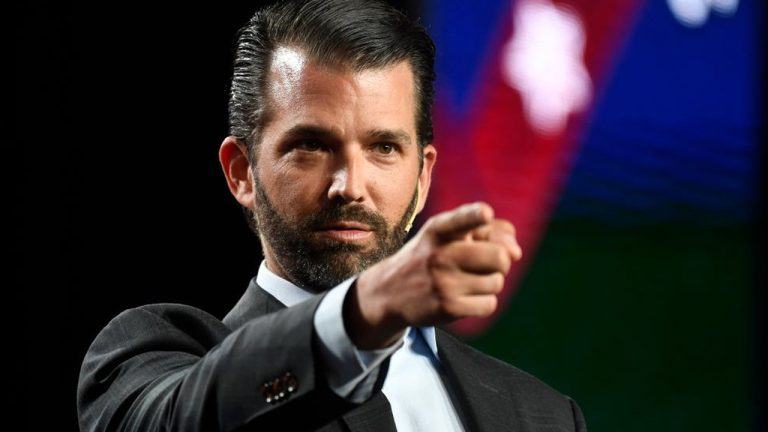
Donald Trump Jr. is stepping down from an advisory role at Kalshi after his firm made a major investment in Polymarket, a competing prediction-market platform. His departure comes as Democrats prepare to examine the Trump family’s expanding financial connections to cryptocurrency and prediction markets, placing new attention on the overlap between political influence, digital assets and emerging betting-style financial products.
The change was first reported by Bloomberg. It ends an arrangement that had drawn scrutiny because Trump Jr. was associated with Kalshi while his firm was backing one of the company’s principal rivals. The move also removes one of the most politically prominent figures connected with the platform at a moment when prediction markets are facing increased attention in Washington.
Kalshi and Polymarket both allow users to trade contracts tied to the outcome of future events. Depending on the contract, participants may take positions on questions such as elections, economic indicators or other developments. The prices of those contracts are intended to reflect the market’s view of how likely a particular outcome is. Supporters describe the platforms as tools for gathering real-time information and expressing views about uncertain events. Critics argue that contracts linked to politics can resemble gambling and may create concerns about market manipulation, conflicts of interest and the use of privileged information.
Kalshi has operated within the United States regulatory system, while Polymarket has become a major name in the broader prediction-market industry. Their competing business models have placed both companies at the center of a debate over whether event contracts should be treated primarily as financial products, betting instruments or a new category that does not fit neatly into existing rules.
Trump Jr.’s advisory position at Kalshi became politically sensitive in part because of his family’s wider role in the digital-asset sector. The Trump family has developed financial interests connected to cryptocurrency, and those activities have raised questions among Democrats about how public influence, private business and policy debates might intersect. The planned scrutiny is expected to focus on the family’s financial relationships and the potential implications of its involvement in crypto-related ventures and prediction markets.
The decision to leave Kalshi does not, by itself, resolve those questions. It does, however, change the formal relationship that had linked Trump Jr. to the platform. His investment firm’s backing of Polymarket creates a separate connection to the industry and illustrates how quickly the family’s business interests have spread across adjacent areas of the digital economy.
Neither the reported departure nor the investment necessarily establishes that Trump Jr. influenced Kalshi’s operations or that his firm’s investment created a prohibited conflict. The significance lies in the appearance of overlapping interests. A senior political figure’s family member advising one prediction-market company while investing in another can invite questions about whether business decisions, regulatory positions and political relationships are being kept sufficiently separate.
Those concerns are particularly pronounced when the underlying markets involve elections or other politically consequential events. Prediction markets can attract participants who believe they have better information than the wider public, and their prices may be cited as indicators of public expectations. At the same time, the markets can be affected by low liquidity, concentrated trading or participants attempting to shape perceptions rather than simply profit from accurate forecasts. That makes questions about transparency and oversight central to the debate.
For Democrats, the Trump family’s crypto and prediction-market activities offer another avenue for examining the relationship between the family’s commercial interests and its political prominence. The scrutiny could also intensify a broader argument over whether existing ethics and financial-disclosure rules are adequate for businesses based on digital tokens, online trading and event contracts.
The controversy comes as financial technology companies seek to broaden the types of events that can be traded. Their expansion has prompted regulators, lawmakers and industry participants to debate which agency should oversee such products and what protections should apply to customers. Those disputes have become more politically charged as platforms connected to elections gain visibility.
Trump Jr.’s exit from Kalshi is therefore likely to be viewed in two ways: as a business-development decision following his firm’s investment in a rival, and as a politically significant separation amid anticipated congressional scrutiny. The available reporting does not establish the precise reason for the departure beyond the timing of the competing investment. What is clear is that the move highlights the increasingly crowded intersection of prediction markets, cryptocurrency and the Trump family’s business interests.

Donald Trump Jr. Departs Kalshi Role as Democrats Prepare Review of Family Crypto Ties
European Industry Coalition Forms to Shape Settlement Standards for Tokenized Securities

Polymarket Cuts Staff as Investor Pressure Mounts and Kalshi Gains Ground

Gaming Technologies of the New Time!

Calls for Enhanced Discussion on Bitcoin as Brazil’s Reserve Asset: A Move Towards ‘Internet’s Gold’

Bybit announces it will stop withdrawing services in France from January 8, 2025 after regulatory changes
-
 Press Releases2 years ago
Gaming Technologies of the New Time!
-
 Altcoins2 years ago
Calls for Enhanced Discussion on Bitcoin as Brazil’s Reserve Asset: A Move Towards ‘Internet’s Gold’
-
 Altcoins2 years ago
Bybit announces it will stop withdrawing services in France from January 8, 2025 after regulatory changes
-

 Altcoins2 years ago
FBI เชื่อมโยงนักแสดงเกาหลีเข้ากับการแฮ็ก DMM Exchange มูลค่า 308 ล้านดอลลาร์
-

 Bitcoin1 year ago
Peter Schiff เตือนนักลงทุนคริปโตขาย Ethereum (ETH) เพื่อซื้อ Bitcoin ชี้ ETH มีศักยภาพจำกัด
-

 Altcoins2 years ago
Bitcoin Declines Below $80K: deVere CEO Nigel Green Remains Bullish on Long-Term Outlook Following Strategic U.S. Bitcoin Reserve Announcement
-

 Bitcoin2 years ago
Bitcoin ETF ประสบปัญหาใหญ่ออกเงินสูงถึง 1 พันล้านดอลลาร์ในวันเดียว
-

 Bitcoin2 years ago
5 สกุลเงินคริปโตที่ควรซื้อ เมื่อบริษัท MicroStrategy ของจีนเริ่มสะสม Bitcoin