
Bitcoin
Bitcoin Network Reclaims 1 ZH/s Seven-Day Hashrate Mark After Nearly Eight Months

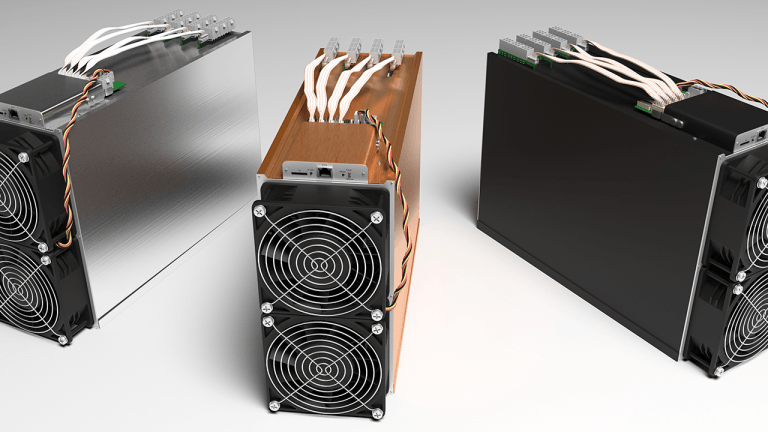
Bitcoin’s seven-day average hashrate has climbed back to 1 zettahash per second, marking a renewed peak in the computing power devoted to securing the network and processing transactions. The level, reached after almost eight months below the threshold, means miners are collectively performing more than one sextillion calculations every second in their effort to validate blocks and compete for bitcoin rewards.
Hashrate is one of the main indicators used to assess the strength of Bitcoin’s mining network. It measures the combined computational work being supplied by miners around the world. Because mining activity can fluctuate from minute to minute as machines connect, disconnect or encounter changing operating conditions, analysts commonly use a seven-day average to identify broader trends. Reaching 1 ZH/s on that measure therefore represents more than a short-lived spike in activity.
The return to the milestone suggests that the global mining sector has continued to expand or restore capacity despite the financial pressures attached to the business. Mining companies must account for electricity, equipment, staffing, maintenance and financing costs while competing for rewards that are distributed according to their share of the network’s total computing power. When more machines come online, the competition for each block generally becomes more intense.
A higher hashrate also strengthens Bitcoin’s resistance to attacks. To reorganize recent transactions or undermine the network’s transaction history, a hostile actor would need to obtain and control an exceptionally large amount of specialized computing equipment, along with the electricity required to operate it. As the aggregate hashrate rises, the cost and logistical difficulty of attempting such an attack increase, although hashrate alone does not eliminate every risk associated with the network.
The milestone is particularly notable because the economics of bitcoin mining have become more demanding. The reward paid to miners for adding a new block was reduced during Bitcoin’s latest halving cycle, cutting the number of newly issued coins available to the industry. With fewer coins awarded per block, operators have been under pressure to use more efficient machines, secure cheaper power and improve the performance of their facilities.
Mining profitability is also closely tied to the market price of bitcoin. When the coin’s price is strong, miners may be able to absorb higher energy or equipment costs and continue operating older machines. When prices weaken, less efficient facilities can become unprofitable, prompting companies to shut down equipment or move it to locations with lower power expenses. The recovery of the seven-day hashrate average to 1 ZH/s indicates that, at the network level, miners have so far maintained or added enough capacity to offset those pressures.
The development comes as the industry weighs another potential use for large-scale computing infrastructure: artificial intelligence. Mining companies have increasingly examined whether their data centers, power contracts and technical expertise can support AI-related workloads. The two industries are not interchangeable, since Bitcoin mining relies on specialized application-specific integrated circuits while many AI applications depend on graphics processors or other advanced hardware. Even so, the prospect of redirecting capital and energy toward AI has raised questions about whether some miners might reduce their cryptocurrency operations.
Bitcoin’s hashrate returning to its previous range suggests that any shift toward AI has not, at least for now, prevented the mining network from regaining the lost capacity. That does not necessarily mean individual operators have abandoned diversification plans. A company can pursue AI hosting, expand mining, or allocate different facilities and power agreements to each activity. The overall network figure reflects the combined result of those decisions rather than the strategy of any single miner.
Hashrate should not be treated as a direct forecast of bitcoin’s price. Mining companies may increase computing power in anticipation of improved market conditions, while some may keep machines running temporarily even when margins are thin because of long-term contracts, expectations of a price recovery or the desire to preserve their position in the industry. Likewise, a rising hashrate can precede or follow price movements without establishing a fixed relationship between the two.
The network’s mining difficulty adjusts periodically in response to changes in participation. If miners add more computing power, the protocol raises the difficulty so that blocks continue to be produced at approximately the intended interval. If capacity leaves the network, difficulty eventually falls. This automatic adjustment allows Bitcoin to continue operating without a central authority deciding how much computing power should be required to find each block.
For miners, the return to 1 ZH/s is therefore both a sign of resilience and a reminder of the scale of the competition. More computing power can improve the network’s security, but it also means individual operators receive a smaller share of the available rewards unless they expand or become more efficient. The milestone highlights how the Bitcoin mining industry continues to adapt to changing rewards, energy costs, market conditions and the growing appeal of alternative computing businesses.

Bitcoin Network Reclaims 1 ZH/s Seven-Day Hashrate Mark After Nearly Eight Months

Block’s Human-Like Voice AI Raises New Concerns Over Fraud Risks
Bitcoin Could Reach $43 Million as JPMorgan Flags Risks After CLARITY Act

Gaming Technologies of the New Time!

Calls for Enhanced Discussion on Bitcoin as Brazil’s Reserve Asset: A Move Towards ‘Internet’s Gold’

Bitcoin Declines Below $80K: deVere CEO Nigel Green Remains Bullish on Long-Term Outlook Following Strategic U.S. Bitcoin Reserve Announcement
-
 Press Releases2 years ago
Gaming Technologies of the New Time!
-
 Altcoins2 years ago
Calls for Enhanced Discussion on Bitcoin as Brazil’s Reserve Asset: A Move Towards ‘Internet’s Gold’
-
 Altcoins2 years ago
Bitcoin Declines Below $80K: deVere CEO Nigel Green Remains Bullish on Long-Term Outlook Following Strategic U.S. Bitcoin Reserve Announcement
-

 Bitcoin2 years ago
Bitcoin Surges Past $64K as SEI and POPCAT Lead Daily Crypto Gains on September 25
-

 Bitcoin1 year ago
Peter Schiff เตือนนักลงทุนคริปโตขาย Ethereum (ETH) เพื่อซื้อ Bitcoin ชี้ ETH มีศักยภาพจำกัด
-

 Bitcoin1 year ago
Strategy ขยายการถือครองบิตคอยน์สู่ 580,955 BTC หลังจากการซื้อใหม่มูลค่าหลายล้านดอลลาร์
-

 Press Releases2 years ago
Evo Exchange: Redefining the Decentralized Exchange Landscape
-

 Altcoins2 years ago
FBI เชื่อมโยงนักแสดงเกาหลีเข้ากับการแฮ็ก DMM Exchange มูลค่า 308 ล้านดอลลาร์