
Bitcoin
SEC Clears 3x-Leveraged Bitcoin and Ether Products for Volatility-Seeking Traders


The U.S. Securities and Exchange Commission has approved a measure described as a “3x fix” for traders seeking amplified exposure to bitcoin and ether, according to the available report dated Oct. 5, 2026. The announcement is framed as a response to the difficulty many digital-asset traders face when attempting to capture sudden market moves.
The report does not identify the products involved, name an issuer, provide a launch date or explain the precise structure of the approval. It does, however, point to a central feature of the decision: traders may gain access to instruments designed to deliver three times the daily performance of bitcoin or ether, or of a related market benchmark.
Products with that objective are generally built for short-term trading rather than long-term holding. A three-times leveraged fund seeks to magnify the movement of its underlying asset over a single trading session. If bitcoin or ether rises by 1% during the relevant period, a product targeting three times that daily move could aim for a gain of about 3%, before fees and other costs. A decline of 1% could produce an approximately 3% loss.
That amplification is the attraction, particularly in cryptocurrency markets, where prices can move sharply within hours. Traders who remain on the sidelines during a rapid rally may view leveraged products as a way to gain exposure without directly purchasing the underlying token. The same structure, however, can turn a brief market reversal into a much larger loss.
The approval therefore does not remove the timing risk that has long shaped digital-asset trading. It may make it easier for market participants to express a short-term view, but it cannot predict whether bitcoin or ether will rise or fall. Nor does it ensure that a product will track its stated objective perfectly over periods longer than one day.
Daily resetting is a key consideration. Leveraged exchange-traded products typically recalculate their exposure at the end of each trading session. As a result, their performance over several days can differ substantially from simply multiplying the total change in the underlying asset by three. The difference becomes more pronounced when prices move up and down repeatedly.
For example, an asset that gains 10% one day and loses 10% the next does not return to its starting value. A three-times product would experience even more pronounced effects from that sequence. The daily reset, market volatility, trading costs and the mechanics of maintaining leverage can all influence the result. Investors who treat such products as ordinary buy-and-hold funds may therefore face outcomes that do not match their initial expectations.
The SEC’s decision is significant because regulatory approval can broaden the range of vehicles available to institutional and individual investors. Instead of opening a direct cryptocurrency account or managing positions on a digital-asset platform, a trader may be able to obtain exposure through a conventional brokerage account, depending on the final product structure and listing arrangements.
That distinction could matter to investors who are familiar with securities markets but less comfortable handling digital wallets, private keys or cryptocurrency exchanges. It could also attract additional trading activity during periods of heavy price movement. Increased access, though, does not eliminate the underlying risks associated with bitcoin and ether, including extreme volatility, rapid reversals and uncertainty over how products perform in stressed markets.
The available material gives no indication of how the SEC reached its decision, whether the approval covers one product or several, or what conditions may apply. It also does not specify whether the instruments provide only long exposure, include inverse strategies or track spot prices, futures contracts or another benchmark. Those details would be important for investors evaluating how closely a product follows the cryptocurrency market.
Fees and liquidity will also shape the practical value of any approved instrument. A product with a wide gap between buying and selling prices may be costly to trade, especially during volatile sessions. Financing expenses, derivatives pricing and portfolio rebalancing can further reduce returns. The headline leverage figure, by itself, offers only a partial picture of the risks and potential performance.
For bitcoin and ether traders, the decision appears to address a familiar frustration: large price moves often occur faster than investors can establish a position. The new approval may provide another way to participate in those moves, but it also raises the stakes for anyone entering after a rally has already begun.
Until the SEC, an issuer or an exchange publishes fuller information, the scope and terms of the “3x” approval remain unclear. What is established from the report is that regulators have approved a mechanism intended to give traders more powerful short-term exposure to the two largest cryptocurrencies, while the consequences will depend heavily on how investors use it.


Block’s Human-Like Voice AI Raises New Concerns Over Fraud Risks
Bitcoin Could Reach $43 Million as JPMorgan Flags Risks After CLARITY Act
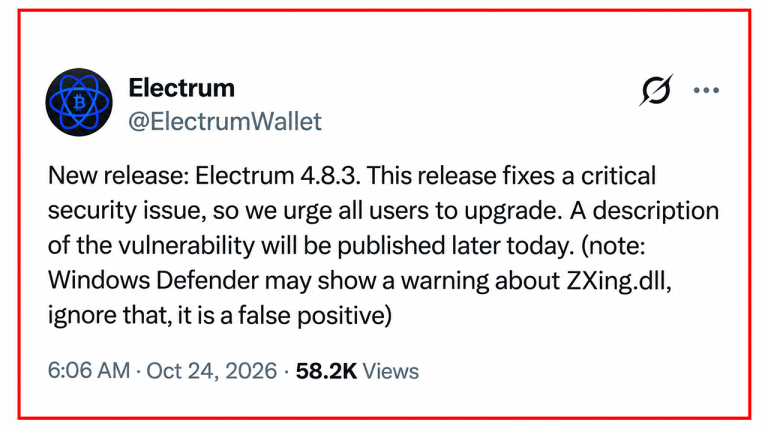
Electrum Wallet Attack Concealed Bitcoin Theft Through Inflated Fees

Gaming Technologies of the New Time!

Calls for Enhanced Discussion on Bitcoin as Brazil’s Reserve Asset: A Move Towards ‘Internet’s Gold’

Bitcoin Declines Below $80K: deVere CEO Nigel Green Remains Bullish on Long-Term Outlook Following Strategic U.S. Bitcoin Reserve Announcement
-
 Press Releases2 years ago
Gaming Technologies of the New Time!
-
 Altcoins2 years ago
Calls for Enhanced Discussion on Bitcoin as Brazil’s Reserve Asset: A Move Towards ‘Internet’s Gold’
-
 Altcoins2 years ago
Bitcoin Declines Below $80K: deVere CEO Nigel Green Remains Bullish on Long-Term Outlook Following Strategic U.S. Bitcoin Reserve Announcement
-

 Bitcoin2 years ago
Bitcoin Surges Past $64K as SEI and POPCAT Lead Daily Crypto Gains on September 25
-

 Bitcoin1 year ago
Peter Schiff เตือนนักลงทุนคริปโตขาย Ethereum (ETH) เพื่อซื้อ Bitcoin ชี้ ETH มีศักยภาพจำกัด
-

 Bitcoin1 year ago
Strategy ขยายการถือครองบิตคอยน์สู่ 580,955 BTC หลังจากการซื้อใหม่มูลค่าหลายล้านดอลลาร์
-

 Press Releases2 years ago
Evo Exchange: Redefining the Decentralized Exchange Landscape
-

 Altcoins2 years ago
FBI เชื่อมโยงนักแสดงเกาหลีเข้ากับการแฮ็ก DMM Exchange มูลค่า 308 ล้านดอลลาร์