
Bitcoin
Dollar Rally May Pose Less Risk to Bitcoin Than Traders Fear

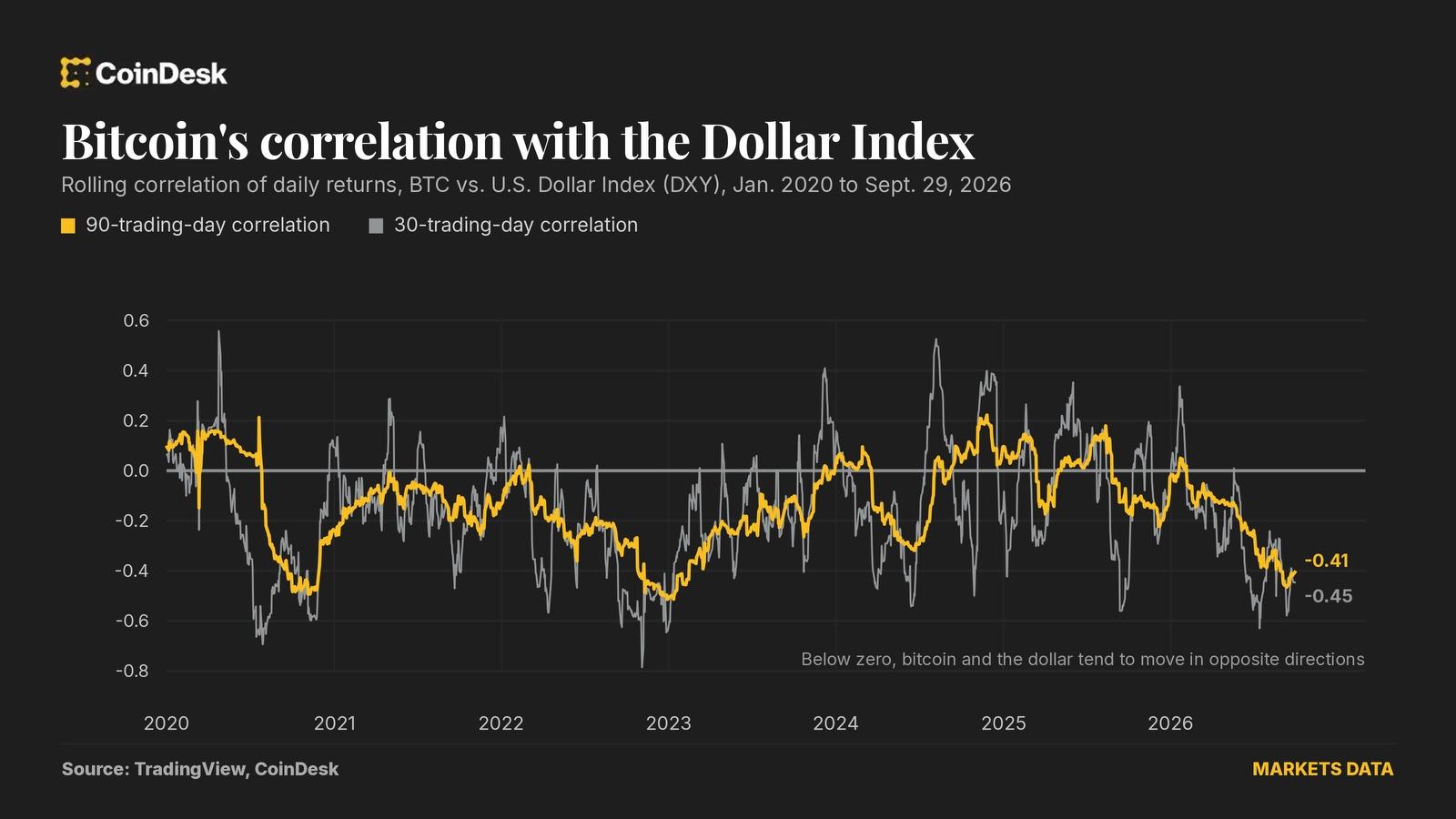
For traders watching bitcoin on Sept. 30, 2026, the dollar’s direction remains one of the most visible signals in global markets. A rising US currency is traditionally treated as a headwind for bitcoin and other risk-sensitive assets. Yet that relationship is less automatic than it appears, and a stronger dollar may pose a smaller threat to bitcoin than many market narratives suggest.
The dollar matters because bitcoin is generally priced in US currency. When the dollar appreciates, each unit of it buys more foreign currency and assets, potentially making bitcoin more expensive for non-US investors. A stronger dollar can also reflect tighter financial conditions, higher US interest rates or a flight toward perceived safety, all of which have historically pressured speculative investments.
That broad relationship is real, but it does not explain every bitcoin move. The dollar can strengthen for very different reasons, and those reasons matter more than the currency’s direction alone. A rally driven by expectations of stronger US growth is not necessarily equivalent to one caused by a scramble for safety. Likewise, a dollar advance resulting from weakness in Europe or Japan can carry different implications from a move caused by rising Treasury yields.
Bitcoin’s response depends on the wider market setting. If the dollar is climbing because investors expect the US economy to outperform while financial conditions remain orderly, traders may continue allocating to assets viewed as alternatives to traditional currencies and payment systems. In that environment, bitcoin could absorb dollar strength better than conventional models suggest.
The more serious risk would arise if the dollar’s rise were accompanied by sharply higher real interest rates, falling liquidity and broad reductions in exposure to risk. Bitcoin does not produce cash flow, so higher inflation-adjusted bond yields can make it less attractive relative to assets offering a dependable return. At the same time, tighter liquidity can force investors to sell profitable positions, regardless of their long-term conviction.
This distinction has become increasingly important as bitcoin’s investor base has widened. The market is no longer shaped only by retail traders and crypto-native funds. Institutional portfolios, macro funds and investment products that provide regulated exposure can all affect price behavior. Those investors may respond to changes in rates, bond yields, equity volatility and currency markets at the same time, making bitcoin more integrated with global asset allocation than it was in earlier cycles.
That integration cuts both ways. It means bitcoin can be sold alongside equities during periods of stress, even when its longer-term supporters view it as an alternative monetary asset. But it also means the cryptocurrency can benefit when investors are seeking protection from concerns about fiscal policy, currency debasement or declining confidence in conventional financial systems. A strong dollar does not automatically eliminate those concerns.
The composition of dollar demand is therefore central to the outlook. A currency can gain value because international investors want US assets, because companies and financial institutions need dollars for funding, or because markets are reducing leverage. Only some of those forces are directly negative for bitcoin. A temporary demand for dollar liquidity can pressure cryptocurrencies, while a more durable shift into US assets may challenge them for a longer period.
Market participants will also be watching the yield curve and central-bank expectations rather than relying on the dollar alone. If the currency strengthens while bond yields fall because investors expect slower growth or easier monetary policy, bitcoin may respond differently than it would to a dollar rally driven by expectations of prolonged tightening. The same headline signal can therefore produce opposite results depending on what is happening underneath it.
Bitcoin’s supply characteristics add another layer to the debate. Unlike a national currency, bitcoin has a predetermined issuance schedule and cannot be created at the discretion of a central bank. That feature is one reason some investors treat it as a hedge against the expansion of money and government liabilities. It does not guarantee price gains, and bitcoin remains highly volatile, but it helps explain why dollar strength is not universally interpreted as a reason to abandon the asset.
There are also regional considerations. A stronger dollar can make local-currency bitcoin prices rise for investors outside the United States even if the dollar-denominated price is unchanged. In countries facing rapid inflation, capital restrictions or weak domestic currencies, demand for dollar-linked and crypto assets may be driven by local financial conditions rather than by the US dollar index. Global demand is consequently more complicated than a simple comparison between bitcoin and the dollar.
That does not make the dollar irrelevant. Traders still use it as a gauge of liquidity, risk appetite and monetary expectations. A sustained advance combined with rising real yields and falling market breadth would represent a more demanding backdrop for bitcoin. Conversely, a dollar that rises for reasons unrelated to tighter global liquidity may be less damaging than the standard risk-off interpretation implies.
The immediate lesson for traders is to avoid treating one currency chart as a complete bitcoin forecast. The dollar’s strength must be considered alongside interest rates, liquidity, credit conditions, equity-market positioning and the reasons investors are moving into US currency. Bitcoin may remain vulnerable to a disorderly tightening of financial conditions, but a stronger dollar by itself is not necessarily the decisive threat that market commentary often assumes.


Tether Partners With Fintech Peso to Expand USDT Retail Payments in Bolivia

Tom Lee Says Bitmine Will Halt Ethereum Purchases Once Holdings Reach 5% of Supply

Bitcoin Pulls Back From $85,000 as Tesla and Meta Fail to Ease AI Concerns

Gaming Technologies of the New Time!

Calls for Enhanced Discussion on Bitcoin as Brazil’s Reserve Asset: A Move Towards ‘Internet’s Gold’

Bitcoin Declines Below $80K: deVere CEO Nigel Green Remains Bullish on Long-Term Outlook Following Strategic U.S. Bitcoin Reserve Announcement
-
 Press Releases2 years ago
Gaming Technologies of the New Time!
-
 Altcoins2 years ago
Calls for Enhanced Discussion on Bitcoin as Brazil’s Reserve Asset: A Move Towards ‘Internet’s Gold’
-
 Altcoins2 years ago
Bitcoin Declines Below $80K: deVere CEO Nigel Green Remains Bullish on Long-Term Outlook Following Strategic U.S. Bitcoin Reserve Announcement
-

 Bitcoin2 years ago
Bitcoin Surges Past $64K as SEI and POPCAT Lead Daily Crypto Gains on September 25
-

 Bitcoin1 year ago
Peter Schiff เตือนนักลงทุนคริปโตขาย Ethereum (ETH) เพื่อซื้อ Bitcoin ชี้ ETH มีศักยภาพจำกัด
-

 Press Releases2 years ago
Evo Exchange: Redefining the Decentralized Exchange Landscape
-

 Bitcoin1 year ago
Strategy ขยายการถือครองบิตคอยน์สู่ 580,955 BTC หลังจากการซื้อใหม่มูลค่าหลายล้านดอลลาร์
-

 Bitcoin1 year ago
Grayscale Investments Submits Draft Registration for IPO, Aiming for Public Trading in U.S.