
Altcoins
Block’s Human-Like Voice AI Raises New Concerns Over Fraud Risks


Block’s latest voice artificial intelligence technology has drawn sharply divided reactions, with listeners impressed by its unusually human sound while others warn that the same realism could make fraud and deception more difficult to detect.
The response reflects a broader tension surrounding voice AI. As developers work to make automated systems sound more natural, improvements that make them easier to use can also make it harder for people to distinguish between a real speaker and a machine-generated voice. Block’s technology has become a fresh example of that debate, prompting admiration from those focused on its potential and concern from people who see risks in its possible misuse.
The strongest positive reactions have centered on the system’s apparent ability to replicate the qualities associated with ordinary human conversation. Rather than sounding like the rigid, mechanically paced voice systems that have dominated automated phone services, the new technology is being described as strikingly lifelike. That quality has fueled excitement about applications that depend on comfortable, accessible voice interaction.
Supporters see natural speech as a significant step for artificial intelligence. A voice assistant that communicates more fluidly could make digital tools easier to use for people who are less comfortable with keyboards, screens or text-based interfaces. It could also broaden access to services that currently require users to navigate complex menus or written instructions.
Among the possible applications being considered is education. CZ has shown interest in the technology’s potential for children’s learning, suggesting that a more engaging and responsive voice could be useful in educational settings. Voice-based systems might, in principle, help explain concepts, answer questions or provide interactive practice. The appeal lies partly in the possibility of creating a more conversational experience than conventional software can offer.
That promise, however, is inseparable from the risks created by realistic synthetic speech. Scammers have already used technology capable of imitating voices to make fraudulent calls and create false impressions of urgency or familiarity. As systems become more convincing, a person receiving a call may find it increasingly difficult to rely on a voice alone as proof of someone’s identity.
The concern extends beyond conventional financial scams. A highly realistic voice could potentially be used to impersonate relatives, colleagues, company officials or public figures. It could be inserted into misleading recordings or used in social-engineering efforts designed to persuade people to reveal information, transfer money or take other actions they would otherwise question.
The central problem is not simply that synthetic voices exist. Automated voices have been available for years, and many listeners can identify older systems by their limited range and unnatural rhythm. The challenge is that more sophisticated models reduce the obvious signs that a recording or conversation is artificial. What once sounded like a computer may now sound like a person, leaving users with fewer immediate clues.
That shift places greater importance on verification. Individuals may need to confirm unexpected requests through a separate phone number, a text message, an established account or another trusted channel. Businesses and institutions face a similar challenge as they consider how employees should respond to voice instructions involving payments, passwords or sensitive data.
The technology also raises questions for parents and educators if voice AI is used by children. A system designed to teach or entertain could offer convenience and personalization, but adults would still need to consider how children understand the authority of an automated voice. A convincing digital speaker may be treated as more trustworthy than it should be, particularly when its role is framed as educational or supportive.
For developers, the reaction to Block’s system illustrates the difficulty of balancing realism with safeguards. Making a voice sound natural may improve accessibility and user engagement, but it can also increase the consequences of abuse. Clear disclosure that a user is interacting with an AI system, limits on sensitive functions and stronger methods of identity verification are among the measures that could become more important as the technology spreads.
The divided response is therefore significant. Amazement signals how quickly voice AI is approaching ordinary human communication, while apprehension shows that technical progress is also changing the nature of deception. The more convincing a system becomes, the less useful instinctive judgments about whether a voice “sounds real” may be.
Block’s voice AI has consequently become part of a larger public conversation about what people should expect from machines that speak. Its possible role in education highlights the constructive uses that attract attention, while fears about scams underscore the need for caution. The technology’s reception suggests that future advances will be judged not only by how naturally they communicate, but also by how effectively they protect the people who hear them.

a16z Removes “Crypto” Label From Flagship Fund as Investment Strategy Shifts
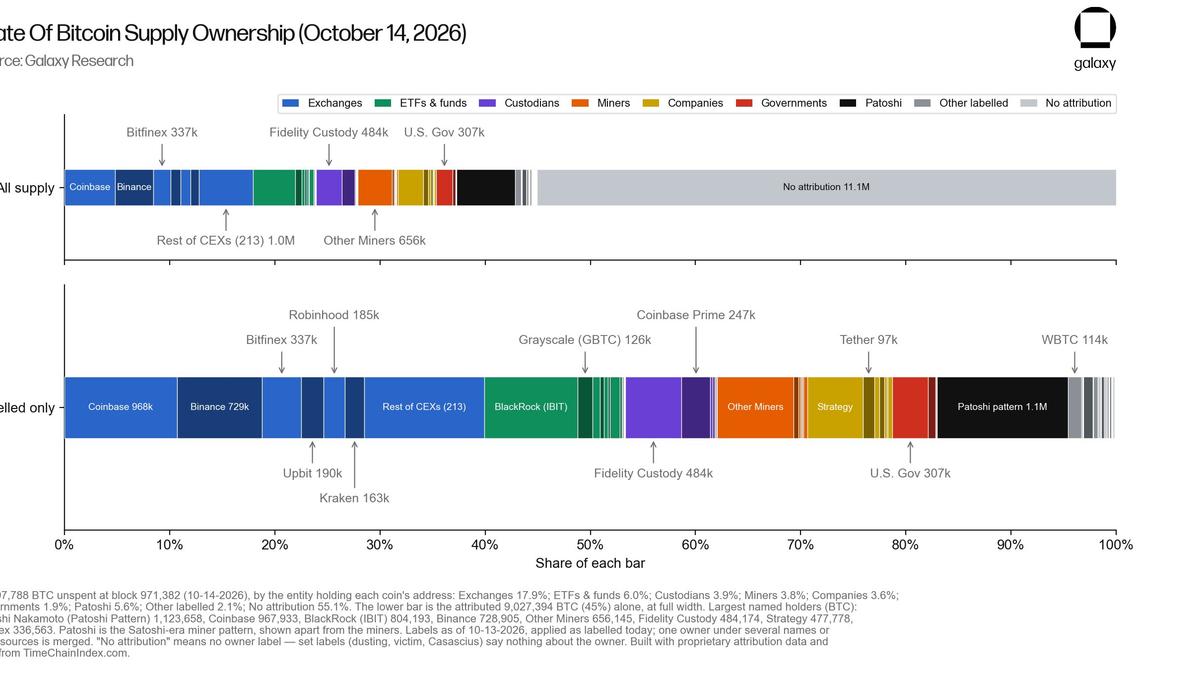
Bitcoin: More Than 11 Million Coins Have No Identified Owner

Beyond Crypto Trading: How PLUS Mainnet Is Building Toward the Next Phase of Blockchain Finance

Gaming Technologies of the New Time!

Calls for Enhanced Discussion on Bitcoin as Brazil’s Reserve Asset: A Move Towards ‘Internet’s Gold’

Bitcoin Declines Below $80K: deVere CEO Nigel Green Remains Bullish on Long-Term Outlook Following Strategic U.S. Bitcoin Reserve Announcement
-
 Press Releases2 years ago
Gaming Technologies of the New Time!
-
 Altcoins2 years ago
Calls for Enhanced Discussion on Bitcoin as Brazil’s Reserve Asset: A Move Towards ‘Internet’s Gold’
-
 Altcoins2 years ago
Bitcoin Declines Below $80K: deVere CEO Nigel Green Remains Bullish on Long-Term Outlook Following Strategic U.S. Bitcoin Reserve Announcement
-

 Bitcoin2 years ago
Bitcoin Surges Past $64K as SEI and POPCAT Lead Daily Crypto Gains on September 25
-

 Bitcoin1 year ago
Peter Schiff เตือนนักลงทุนคริปโตขาย Ethereum (ETH) เพื่อซื้อ Bitcoin ชี้ ETH มีศักยภาพจำกัด
-

 Bitcoin1 year ago
Strategy ขยายการถือครองบิตคอยน์สู่ 580,955 BTC หลังจากการซื้อใหม่มูลค่าหลายล้านดอลลาร์
-

 Press Releases2 years ago
Evo Exchange: Redefining the Decentralized Exchange Landscape
-

 Altcoins2 years ago
FBI เชื่อมโยงนักแสดงเกาหลีเข้ากับการแฮ็ก DMM Exchange มูลค่า 308 ล้านดอลลาร์