
Altcoins
Keystone Security Breach Reveals Customer Addresses, Raising Scam Risks

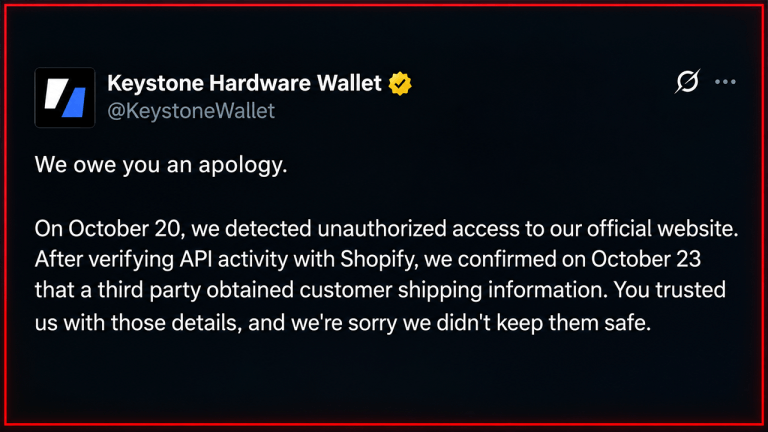
Hardware wallet maker Keystone has disclosed a customer data breach in which unauthorized access to its website exposed personal and purchase-related information belonging to buyers. The company said the incident affected names, shipping addresses, contact details and records associated with purchases.
Keystone stated that the breach did not compromise customers’ recovery phrases or private keys. Those credentials are the most sensitive components of a self-custody cryptocurrency wallet because they can be used to restore access to funds or authorize transactions. The company’s assurance means the incident, as described, involved customer information held through its website rather than the cryptographic material used to control wallets.
Even without direct access to wallet keys, however, leaked buyer information can create meaningful security risks. People who purchased hardware wallets may be targeted by fraudulent emails, text messages or phone calls designed to appear as legitimate communications from Keystone, a delivery company or a cryptocurrency service. Attackers can use a customer’s name, address and purchase history to make those messages more convincing than generic scams.
A recipient could, for example, be told that a shipment requires an additional payment, that an order has been delayed or that a wallet must be “verified” following the breach. A malicious message might then direct the customer to a counterfeit website, request a recovery phrase or encourage the installation of software. Recovery phrases should never be entered into a website, shared with a company representative or provided to anyone claiming to offer technical support.
The exposure of shipping addresses also creates a physical-security concern. Hardware wallets are often bought specifically to protect digital assets over the long term, and information showing that a person purchased one may identify them as a potential cryptocurrency holder. That does not establish that funds are at risk, but it can make targeted harassment, extortion or attempted theft easier to plan. Customers whose details were exposed may therefore need to consider both online deception and unwanted contact at home.
Keystone’s disclosure adds the company to a broader series of security problems affecting hardware-wallet manufacturers in 2026, including Ledger, according to the source material. The incidents underline an important distinction in cryptocurrency security: protecting the device and its keys is only one part of the overall system. Companies also maintain websites, shopping platforms, customer databases and logistics records, each of which can become a separate point of exposure.
Hardware wallets are designed to keep private keys isolated from internet-connected devices and to reduce the risk that malware can directly access funds. That protection does not prevent a retailer or manufacturer from holding personal information needed to process an order. A compromise of that surrounding infrastructure can expose customers even when the wallet itself and its cryptographic safeguards remain intact.
The breach also highlights the limits of relying solely on a company’s security design. Customers may carefully store their recovery phrases offline and use a hardware wallet correctly, yet still face risks from information disclosed during a purchase. Shipping and contact details can provide criminals with enough context to impersonate a vendor or identify individuals who may own digital assets.
Customers should treat unsolicited messages mentioning a Keystone order or account with caution. Links in unexpected emails and text messages should not be opened, and requests for recovery phrases, PINs, passwords or remote access should be regarded as fraudulent. Any support request should be initiated through contact information obtained independently from the company’s official website, rather than through a message received after the breach.
People who used a publicly visible address or who no longer control the address supplied during a purchase should also remain alert to unusual mail, deliveries or calls. Changing a delivery address is not a substitute for protecting wallet credentials, but separating personal information from cryptocurrency activity can reduce future exposure. Customers should also monitor relevant accounts for suspicious activity and preserve copies of communications that appear to reference the incident.
The disclosure leaves several operational questions open, including the scope of the unauthorized access, when it began, how long it lasted and how many customers were affected. The available information does not establish whether the exposed records were downloaded, published or used in subsequent scams. It also does not indicate that private keys or recovery phrases were accessed.
Those details will be important in assessing the breach’s full impact. A clear account of the affected systems, the data involved and the steps taken to secure the website would help customers judge the level of risk. Until more information becomes available, the company’s statement that wallet credentials remain secure should not be interpreted as meaning that exposed personal information is harmless.
For cryptocurrency users, the incident is a reminder that self-custody does not eliminate dependence on third parties. A wallet may protect the keys that control funds, while a manufacturer, retailer or delivery partner retains information that can expose the person using it. The immediate priority for affected buyers is to protect that distinction: keep recovery phrases offline and private, while treating any new contact connected to the purchase as a possible attempt to exploit the leaked data.

Keystone Security Breach Reveals Customer Addresses, Raising Scam Risks

Strategy and Strive Weigh Bitcoin Purchases Against Preferred-Stock Dividend Obligations
MiCA Register Reveals Approved Crypto Service Providers and Stablecoin Issuers

Gaming Technologies of the New Time!

Calls for Enhanced Discussion on Bitcoin as Brazil’s Reserve Asset: A Move Towards ‘Internet’s Gold’

Bitcoin Declines Below $80K: deVere CEO Nigel Green Remains Bullish on Long-Term Outlook Following Strategic U.S. Bitcoin Reserve Announcement
-
 Press Releases2 years ago
Gaming Technologies of the New Time!
-
 Altcoins2 years ago
Calls for Enhanced Discussion on Bitcoin as Brazil’s Reserve Asset: A Move Towards ‘Internet’s Gold’
-
 Altcoins2 years ago
Bitcoin Declines Below $80K: deVere CEO Nigel Green Remains Bullish on Long-Term Outlook Following Strategic U.S. Bitcoin Reserve Announcement
-

 Bitcoin2 years ago
Bitcoin Surges Past $64K as SEI and POPCAT Lead Daily Crypto Gains on September 25
-
 Bitcoin1 year ago
Peter Schiff เตือนนักลงทุนคริปโตขาย Ethereum (ETH) เพื่อซื้อ Bitcoin ชี้ ETH มีศักยภาพจำกัด
-

 Bitcoin1 year ago
Strategy ขยายการถือครองบิตคอยน์สู่ 580,955 BTC หลังจากการซื้อใหม่มูลค่าหลายล้านดอลลาร์
-
 Press Releases2 years ago
Evo Exchange: Redefining the Decentralized Exchange Landscape
-
 Altcoins2 years ago
FBI เชื่อมโยงนักแสดงเกาหลีเข้ากับการแฮ็ก DMM Exchange มูลค่า 308 ล้านดอลลาร์