
Altcoins
Ripple Swell: Bessent Signals Alternative Path for Stalled CLARITY Act

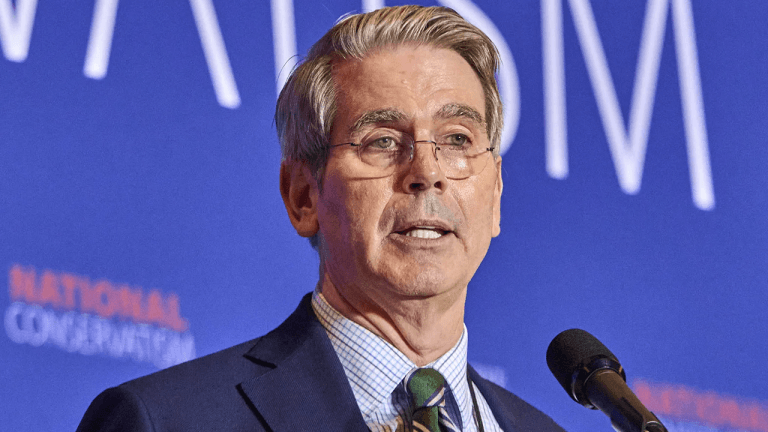
U.S. Treasury Secretary Scott Bessent used Ripple’s Swell conference in New York to signal that the administration is preparing an alternative path for cryptocurrency legislation after the Senate failed to advance the CLARITY Act.
Speaking on Oct. 27 at the opening of the 10th Swell conference, Bessent said the Treasury could help coordinate the Securities and Exchange Commission and the Commodity Futures Trading Commission while lawmakers remain unable to reach agreement on the bill. His remarks offered no detailed replacement legislation, but they suggested that federal regulators may be asked to work more closely to address the uncertainty surrounding digital-asset oversight.
Bessent said the Treasury has “a lot of convening powers,” describing the department’s ability to bring agencies and other officials together as a potential tool for moving policy forward. The comments point to a regulatory approach that would rely, at least in the near term, on coordination among existing institutions rather than on a completed statutory framework from Congress.
The CLARITY Act was intended to establish clearer rules for the digital-asset industry, including a framework for determining which activities should fall under SEC or CFTC supervision. Its failure to move through the Senate has left companies, investors and regulators facing continued questions over jurisdiction. The division between the two agencies has long been one of the central issues in the U.S. cryptocurrency debate, with market participants seeking greater certainty about whether particular tokens and platforms are subject to securities or commodities regulation.
Bessent’s appearance placed that unresolved policy debate at the center of a major industry gathering. Ripple’s Swell conference attracts executives, financial institutions and other participants involved in blockchain and digital payments. The event has also become a venue where government officials and industry leaders discuss the relationship between emerging payment technologies and the traditional financial system.
Although the Treasury secretary did not lay out a legislative substitute for the CLARITY Act, his remarks indicated that the department could play a more active role in bridging the gap between Congress and the regulatory agencies. A coordinated process could involve helping the SEC and CFTC share information, align their approaches or clarify how existing rules apply to digital-asset businesses. Such efforts would not necessarily provide the same legal certainty as an act of Congress, but they could offer an interim response to the stalled legislation.
The distinction is significant for the cryptocurrency sector. Rules issued or interpreted by regulators can shape how companies structure products, register businesses and interact with customers. They can also affect the ability of financial institutions to work with digital-asset firms. Without a clearly defined division of authority, companies may face overlapping demands or uncertainty about which agency has the final say over a particular market or asset.
Congressional action remains the more permanent route for establishing those boundaries. Legislation could define the roles of the SEC and CFTC, specify registration requirements and create standards for digital-asset issuers and intermediaries. But the Senate’s inability to advance the CLARITY Act means that any such framework will require additional negotiations before it can become law.
The Treasury’s potential involvement therefore represents what may be a temporary policy bridge. Bessent’s comments did not indicate that the department could replace Congress or independently create the comprehensive rules envisioned by the legislation. Instead, they emphasized the practical authority available to the Treasury to convene federal agencies and encourage a more unified approach.
That possibility comes as the industry continues to call for an end to regulatory ambiguity. Crypto companies have argued that inconsistent treatment across agencies makes it harder to plan investments and develop services in the United States. Regulators, meanwhile, have sought to apply existing financial laws to rapidly changing products and business models, even as lawmakers debate whether those laws are sufficient.
The Treasury secretary’s remarks also underscore the broader role that financial officials may play in shaping digital-asset policy. While the SEC and CFTC are responsible for enforcing and administering much of the relevant market regulation, the Treasury has a wider mandate covering financial stability, sanctions, illicit-finance risks and coordination across the federal government. Its involvement could therefore bring multiple policy concerns into the same discussion.
For now, however, the contours of the proposed “Plan B” remain undefined. Bessent identified cooperation between the Treasury, SEC and CFTC as a possible way forward, but he did not announce a new rule, timetable or formal initiative at the conference. The next steps will depend on whether the agencies can develop a common approach and whether lawmakers eventually revive negotiations over the CLARITY Act.
His appearance nevertheless gave the industry a clear message: the Senate’s setback has not ended the administration’s effort to address digital-asset regulation. Until Congress produces a durable legislative framework, the Treasury may seek to use its coordinating authority to narrow the gaps between regulators and provide the market with greater clarity.

Ripple Swell: Bessent Signals Alternative Path for Stalled CLARITY Act
Bessent Says Cryptocurrency Could Help Preserve the U.S. Dollar’s Global Dominance
Bitcoin Faces Key Test as Big Tech Earnings, Fed Decision and Inflation Data Approach

Gaming Technologies of the New Time!

Calls for Enhanced Discussion on Bitcoin as Brazil’s Reserve Asset: A Move Towards ‘Internet’s Gold’

Bitcoin Declines Below $80K: deVere CEO Nigel Green Remains Bullish on Long-Term Outlook Following Strategic U.S. Bitcoin Reserve Announcement
-
 Press Releases2 years ago
Gaming Technologies of the New Time!
-
 Altcoins2 years ago
Calls for Enhanced Discussion on Bitcoin as Brazil’s Reserve Asset: A Move Towards ‘Internet’s Gold’
-
 Altcoins2 years ago
Bitcoin Declines Below $80K: deVere CEO Nigel Green Remains Bullish on Long-Term Outlook Following Strategic U.S. Bitcoin Reserve Announcement
-

 Bitcoin1 year ago
Peter Schiff เตือนนักลงทุนคริปโตขาย Ethereum (ETH) เพื่อซื้อ Bitcoin ชี้ ETH มีศักยภาพจำกัด
-

 Bitcoin2 years ago
Bitcoin Surges Past $64K as SEI and POPCAT Lead Daily Crypto Gains on September 25
-

 Bitcoin1 year ago
Strategy ขยายการถือครองบิตคอยน์สู่ 580,955 BTC หลังจากการซื้อใหม่มูลค่าหลายล้านดอลลาร์
-

 Press Releases2 years ago
Evo Exchange: Redefining the Decentralized Exchange Landscape
-

 Altcoins2 years ago
FBI เชื่อมโยงนักแสดงเกาหลีเข้ากับการแฮ็ก DMM Exchange มูลค่า 308 ล้านดอลลาร์