
Bitcoin
Bitcoin Falls Below $57,000 for First Time in Two Years as Crypto Market Slides

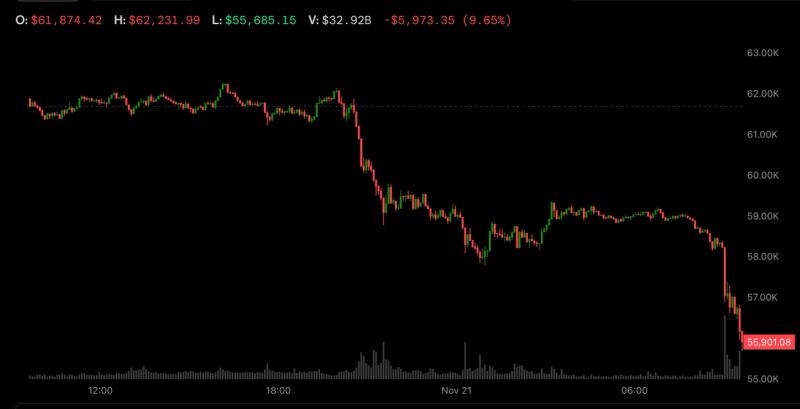
Bitcoin’s sell-off intensified on Saturday, pushing the cryptocurrency below $57,000 and marking its lowest level in roughly two years. The decline placed renewed focus on the fragility of digital-asset markets, where sharp moves can spread quickly across major tokens and trigger further selling.
The move was significant not only because of the price level itself, but also because Bitcoin had remained above that threshold for an extended period. A break to a two-year low can alter the tone of trading, particularly for investors who had treated earlier price ranges as signs of stability. Once those levels give way, traders may reassess their expectations, reduce exposure or wait for evidence that the decline has ended.
Bitcoin’s market operates continuously, unlike traditional stock exchanges that close at the end of each trading session. That structure can amplify price swings. Selling that begins in one region can continue through several time zones without a scheduled pause, allowing momentum to build before investors have an opportunity to digest the move. Liquidity can also vary throughout the day, making large transactions more capable of moving prices when trading activity is thinner.
The latest decline was not isolated to Bitcoin. The broader wording surrounding the sell-off reflects the interconnected nature of the cryptocurrency market, where Bitcoin often serves as the main reference point for sentiment. When the largest digital asset weakens sharply, other cryptocurrencies can face pressure as investors move away from riskier holdings or convert positions into cash or more liquid assets.
That relationship is partly structural. Bitcoin accounts for a large share of total crypto-market value and is widely held by funds, companies and individual traders. It is also frequently used as collateral or as a benchmark for portfolios containing multiple digital assets. A fall in Bitcoin can therefore affect market confidence even among investors who do not hold the token directly.
The breach of $57,000 is also likely to draw attention to technical trading levels. Market participants commonly monitor previous highs, lows and periods of heavy trading activity when assessing support and resistance. A support level is a price area where buyers have previously emerged. If that level fails, traders may conclude that demand is weaker than expected and look for the next area where buying interest could return. Technical levels do not determine prices on their own, but they can influence short-term behavior when many market participants are watching the same thresholds.
Still, the available report does not identify a specific cause for Saturday’s drop. Cryptocurrency prices can respond to a range of factors, including changes in investor appetite for risk, movements in other financial markets, shifts in expectations for interest rates, regulatory developments and large transactions by market participants. Without a stated catalyst, it would be premature to attribute the decline to any single event.
The episode highlights the difference between Bitcoin’s long-term profile and its day-to-day trading behavior. Supporters view the asset as a scarce digital store of value and emphasize its fixed issuance structure. Critics and more cautious investors point to its history of steep rallies and sudden reversals. Both perspectives can coexist: Bitcoin may attract long-term interest while remaining highly volatile over shorter periods.
For investors, a two-year low can have practical consequences beyond the headline price. Those using borrowed funds may face margin calls if the value of their positions falls below required thresholds. Others may be forced to sell to meet redemptions or manage losses. Such transactions can intensify a decline, particularly when they occur at the same time as discretionary investors are cutting risk.
The psychological effect can be just as important. A sustained decline may discourage new buyers who had been waiting for evidence of upward momentum, while traders who entered at higher prices may become increasingly sensitive to additional losses. At the same time, some participants view sharp sell-offs as opportunities to buy at reduced prices. The balance between those groups will help determine whether the market finds stability or continues lower.
Bitcoin’s drop below $57,000 therefore represents more than a single intraday move. It signals a clear deterioration in market sentiment and places the cryptocurrency’s recent trading range under examination. The next phase will depend on whether buyers return with enough strength to reclaim lost ground, or whether continued selling pushes Bitcoin and other digital assets further into a period of weakness.

Bitcoin Falls Below $57,000 for First Time in Two Years as Crypto Market Slides
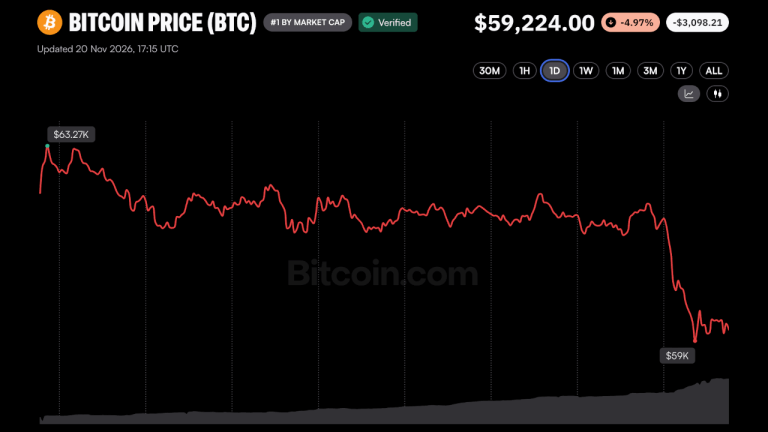
Bitcoin Falls Below $59K as Crypto Liquidations Exceed $1.5 Billion
Boris Johnson Questions Bitcoin’s Leadership as Adam Back Predicts $1 Million by 2028

Gaming Technologies of the New Time!

Bybit announces it will stop withdrawing services in France from January 8, 2025 after regulatory changes

Calls for Enhanced Discussion on Bitcoin as Brazil’s Reserve Asset: A Move Towards ‘Internet’s Gold’
-
 Press Releases2 years ago
Gaming Technologies of the New Time!
-
 Altcoins2 years ago
Bybit announces it will stop withdrawing services in France from January 8, 2025 after regulatory changes
-
 Altcoins2 years ago
Calls for Enhanced Discussion on Bitcoin as Brazil’s Reserve Asset: A Move Towards ‘Internet’s Gold’
-

 Altcoins2 years ago
FBI เชื่อมโยงนักแสดงเกาหลีเข้ากับการแฮ็ก DMM Exchange มูลค่า 308 ล้านดอลลาร์
-

 Bitcoin1 year ago
Peter Schiff เตือนนักลงทุนคริปโตขาย Ethereum (ETH) เพื่อซื้อ Bitcoin ชี้ ETH มีศักยภาพจำกัด
-

 Bitcoin2 years ago
5 สกุลเงินคริปโตที่ควรซื้อ เมื่อบริษัท MicroStrategy ของจีนเริ่มสะสม Bitcoin
-

 Bitcoin2 years ago
Bitcoin ETF ประสบปัญหาใหญ่ออกเงินสูงถึง 1 พันล้านดอลลาร์ในวันเดียว
-

 Altcoins2 years ago
Gemini ประกาศเพิ่มการซื้อขายเหรียญ Stablecoin RLUSD ของ Ripple