
Bitcoin
Babylon Considers Ending Bitcoin Staking, Leaving $2.6B in BTC in Limbo

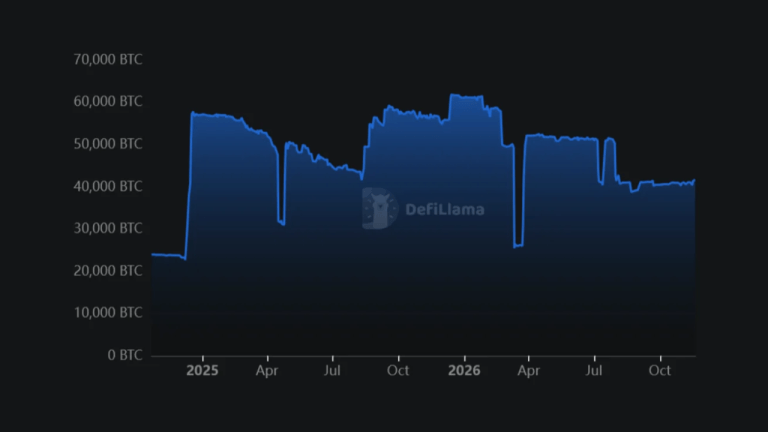
Babylon is weighing a possible end to its Bitcoin staking program, a move that could affect approximately 41,600 BTC currently associated with the protocol and place nearly $2.6 billion worth of the cryptocurrency under renewed scrutiny.
The proposal came from Babylon co-founder Fisher Yu on Tuesday, Nov. 17. Yu suggested that the protocol should end Bitcoin staking by the close of this year, introducing uncertainty for users and market participants who have committed BTC to the system. No final decision was identified in the proposal, and the immediate consequences for the staked coins remain unclear.
The issue arrives at a difficult moment for digital-asset markets, which have already been described as exhausted. A decision to wind down the program would add another source of uncertainty to a sector where investors are closely watching liquidity, yields and the ability to move assets between protocols. Because Bitcoin is the largest cryptocurrency by market value, changes involving tens of thousands of coins can attract attention even when the assets are not necessarily being sold.
The central question is what would happen to the roughly 41,600 BTC tied to Babylon if the staking system were discontinued. The end of a staking program does not automatically mean that all of the underlying Bitcoin will enter the open market. Depending on the protocol’s rules, users could be required to withdraw their funds through a defined process, wait for a specific period or take other steps before regaining full control of their assets. The available source material does not specify which mechanism Babylon would use or how quickly withdrawals would be completed.
That distinction matters. A program shutdown and a mass liquidation are not the same event. If users simply reclaim their Bitcoin, the effect on market prices could be limited. Some holders might also choose to move their assets to other services, retain them in personal wallets or continue holding them without seeking immediate exposure to another yield-generating product. By contrast, if a large portion of the coins were sold, the market would face a different set of pressures.
The proposal therefore leaves several practical questions unanswered. Babylon users would need clarity on the timetable for any closure, the treatment of pending staking positions and the process for unlocking or withdrawing Bitcoin. They would also need to know whether existing rewards would be paid, how any outstanding obligations would be handled and whether the protocol would stop accepting new deposits before the proposed year-end deadline.
Those details are especially important because Bitcoin staking products have attempted to create new uses for an asset that does not operate like a conventional proof-of-stake token. In a proof-of-stake network, participants typically lock tokens to help secure the chain and may receive rewards for doing so. Bitcoin itself uses a different consensus model, meaning projects that offer Bitcoin staking generally rely on additional infrastructure, applications or networks to give deposited BTC a productive role. The design of each system determines how assets are locked, how risks are distributed and how users recover their funds.
Babylon’s possible decision could prompt users and investors to reassess those arrangements. Staking often involves trade-offs between potential returns and access to the underlying asset. A user who locks Bitcoin may receive an opportunity to earn rewards or participate in another network, but may also face restrictions, technical risks and delays when attempting to withdraw. Any change to Babylon’s plans could bring those considerations into sharper focus.
The size of the position makes the proposal significant beyond Babylon’s own community. At nearly $2.6 billion, the Bitcoin associated with the protocol represents a substantial pool of digital assets, although its actual market impact would depend on what holders decide to do. The value of the coins will also change with Bitcoin’s price, so the dollar figure should be understood as an estimate rather than a fixed amount.
For the wider market, the announcement creates an overhang rather than a confirmed supply shock. Traders may monitor wallet movements, withdrawal activity and any subsequent communication from Babylon for indications of whether users are preparing to exit. Until the protocol provides a formal plan, however, speculation about large-scale selling remains just that.
Yu’s suggestion also raises broader questions about the durability of Bitcoin-based yield products. Projects in this area have sought to attract capital by connecting Bitcoin to decentralized applications and other blockchain services. Their success depends not only on the rewards offered but also on confidence in the technical architecture, the rules governing withdrawals and the parties responsible for managing risk.
Babylon has yet to publicly resolve the most important operational details in the proposal described by the source material. For now, the program remains associated with about 41,600 BTC, while users and observers wait to learn whether the staking system will be closed, how the transition would be managed and whether the coins will be withdrawn, redeployed or simply remain held by their owners.

Babylon Considers Ending Bitcoin Staking, Leaving $2.6B in BTC in Limbo
GTA 6 Takes 84% Favorite Status in Polymarket’s Game of the Year Market
Trump Media Targets $884 Million Debt Clearance While Holding Onto Bitcoin

Gaming Technologies of the New Time!

Bybit announces it will stop withdrawing services in France from January 8, 2025 after regulatory changes

Calls for Enhanced Discussion on Bitcoin as Brazil’s Reserve Asset: A Move Towards ‘Internet’s Gold’
-
 Press Releases2 years ago
Gaming Technologies of the New Time!
-
 Altcoins2 years ago
Bybit announces it will stop withdrawing services in France from January 8, 2025 after regulatory changes
-
 Altcoins2 years ago
Calls for Enhanced Discussion on Bitcoin as Brazil’s Reserve Asset: A Move Towards ‘Internet’s Gold’
-

 Altcoins2 years ago
FBI เชื่อมโยงนักแสดงเกาหลีเข้ากับการแฮ็ก DMM Exchange มูลค่า 308 ล้านดอลลาร์
-

 Bitcoin1 year ago
Peter Schiff เตือนนักลงทุนคริปโตขาย Ethereum (ETH) เพื่อซื้อ Bitcoin ชี้ ETH มีศักยภาพจำกัด
-

 Bitcoin2 years ago
5 สกุลเงินคริปโตที่ควรซื้อ เมื่อบริษัท MicroStrategy ของจีนเริ่มสะสม Bitcoin
-

 Bitcoin2 years ago
Bitcoin ETF ประสบปัญหาใหญ่ออกเงินสูงถึง 1 พันล้านดอลลาร์ในวันเดียว
-

 Altcoins2 years ago
Bitcoin Declines Below $80K: deVere CEO Nigel Green Remains Bullish on Long-Term Outlook Following Strategic U.S. Bitcoin Reserve Announcement