
Bitcoin
Bitcoin Remains Below Pre-Crash Levels One Year After $19 Billion Selloff

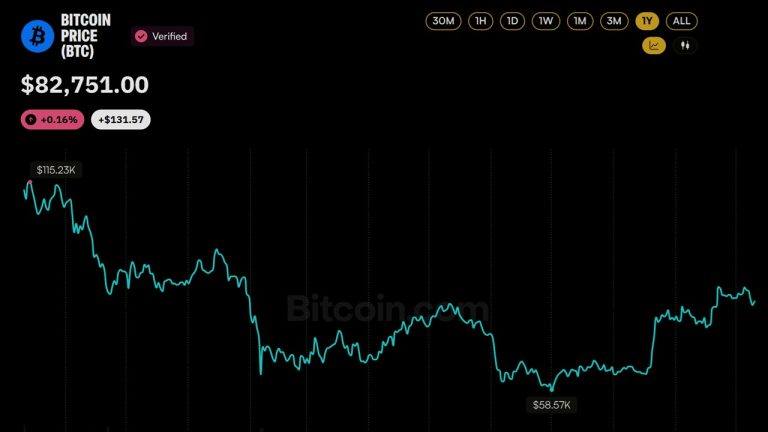
A year after more than $19 billion in leveraged cryptocurrency positions were wiped out in a single night, bitcoin remains far below the record it reached just days before the market collapse.
The sharp decline, which followed an announcement by President Donald Trump on Oct. 10, 2025, became one of the defining shocks for digital-asset markets that year. Trump said the United States would impose a 100% tariff on Chinese imports, a move that immediately intensified fears about a broader trade conflict and unsettled investors across global markets.
Bitcoin had reached a record high four days before the sell-off. Yet the cryptocurrency failed to regain that peak during the following year and, at the anniversary of the crash, was trading roughly 34% below it. The gap has kept the episode relevant even as attention has shifted to other developments in the crypto industry, including regulation, institutional adoption and the changing relationship between digital assets and traditional financial markets.
The losses were amplified by leverage. In derivatives markets, traders can open positions far larger than the amount of capital they deposit. That structure can increase profits when prices move in the expected direction, but it also leaves positions vulnerable to forced liquidation when markets turn suddenly. Once prices began falling after the tariff announcement, exchanges automatically closed many heavily leveraged trades, adding further selling pressure to an already unstable market.
The result was a cascade that erased billions of dollars in positions within hours. The figure of more than $19 billion reflects the scale of those liquidations, rather than a single pool of cash disappearing from the financial system. Still, the losses represented a major transfer of risk from leveraged traders and underscored how quickly a crypto rally can reverse when market participants are positioned too aggressively.
The timing made the shock especially severe. Bitcoin had been climbing toward a record, encouraging traders to assume that momentum would continue. When the tariff announcement changed the market’s outlook, those assumptions were challenged almost instantly. Investors who had borrowed to increase their exposure had little room to absorb the decline, while automated liquidation systems accelerated the movement.
That dynamic is familiar in cryptocurrency markets, where trading takes place around the clock and price movements can be magnified by derivatives activity. Unlike traditional exchanges that operate during set hours, crypto platforms remain open continuously. A major policy announcement can therefore trigger a global reaction without waiting for the next trading session. The Oct. 10 sell-off illustrated how quickly a political decision can move through interconnected markets and become a digital-asset crisis.
The crash also exposed the limits of a record price as a measure of market strength. Bitcoin’s climb to a new high had created an appearance of resilience, but the subsequent decline showed that the market remained dependent on confidence and liquidity. A record can attract new buyers, yet it can also encourage traders to use more leverage, particularly when they believe a sustained rally is underway. That positioning can make a market more fragile rather than more secure.
Bitcoin’s inability to reclaim the previous high over the next year has added to the significance of the event. Recoveries in cryptocurrency markets are often judged by whether an asset can return to its earlier peak, not simply by whether it rebounds from its lowest point. By that measure, the market had not fully repaired the damage from the October collapse. Remaining about 34% below the record suggested that the crash continued to shape investor expectations long after the initial liquidation wave ended.
For traders, the episode became a reminder that headline events can overwhelm technical signals and recent market trends. A price chart that points upward offers little protection when a sudden policy announcement changes expectations about trade, growth or risk. The event also reinforced the dangers of treating borrowed exposure as a substitute for conviction. Leverage can magnify a successful position, but it can remove a trader from the market just as quickly when prices move the other way.
The losses affected more than individual positions. A liquidation wave can reduce available liquidity, force traders to sell other assets and increase volatility across the broader crypto market. Even participants who did not use leverage can be affected when forced selling pushes prices sharply lower. The episode therefore became a test not only of bitcoin’s price, but also of the market’s ability to absorb a sudden and concentrated shock.
A year later, the Oct. 10 crash stands as a measure of how much confidence the market had lost from its pre-crash peak. Bitcoin remained one of the industry’s most closely watched assets, but its performance showed that a major rally can be undone in a matter of hours when leverage, uncertainty and automated liquidations collide. The record set before the tariff announcement remained out of reach, leaving the $19 billion wipeout as a lasting marker of the market’s vulnerability.


Robinhood Adds Bitcoin to Its Balance Sheet as a New Strategic Phase Begins

Bitcoin Remains Below Pre-Crash Levels One Year After $19 Billion Selloff

Tokenized Commodities Broaden Their Reach With Oil and Lending Markets Beyond Gold

Gaming Technologies of the New Time!

Calls for Enhanced Discussion on Bitcoin as Brazil’s Reserve Asset: A Move Towards ‘Internet’s Gold’

Bitcoin Declines Below $80K: deVere CEO Nigel Green Remains Bullish on Long-Term Outlook Following Strategic U.S. Bitcoin Reserve Announcement
-
 Press Releases2 years ago
Gaming Technologies of the New Time!
-
 Altcoins2 years ago
Calls for Enhanced Discussion on Bitcoin as Brazil’s Reserve Asset: A Move Towards ‘Internet’s Gold’
-
 Altcoins2 years ago
Bitcoin Declines Below $80K: deVere CEO Nigel Green Remains Bullish on Long-Term Outlook Following Strategic U.S. Bitcoin Reserve Announcement
-

 Bitcoin2 years ago
Bitcoin Surges Past $64K as SEI and POPCAT Lead Daily Crypto Gains on September 25
-

 Press Releases2 years ago
Evo Exchange: Redefining the Decentralized Exchange Landscape
-

 Bitcoin1 year ago
Peter Schiff เตือนนักลงทุนคริปโตขาย Ethereum (ETH) เพื่อซื้อ Bitcoin ชี้ ETH มีศักยภาพจำกัด
-

 Bitcoin1 year ago
Grayscale Investments Submits Draft Registration for IPO, Aiming for Public Trading in U.S.
-

 Press Releases2 years ago
CODE, a Newly Born Project Brings Decentralization Back to the Main Menu