
Altcoins
Iran’s Seven-Day Hormuz Proposal Adds Fresh Uncertainty to Financial Markets

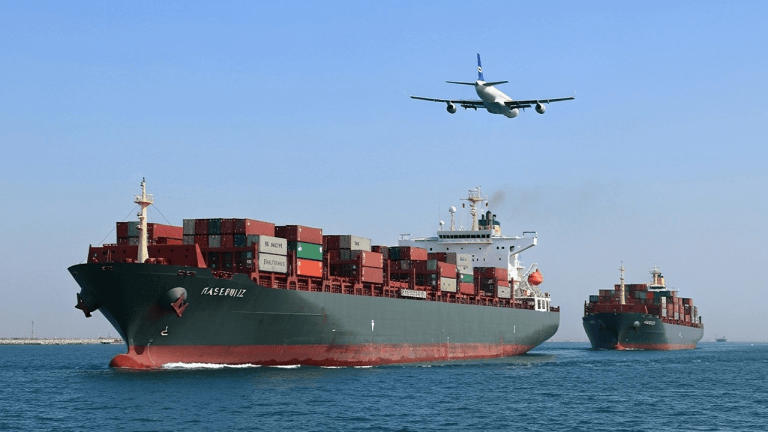
The prospect of a temporary reopening of the Strait of Hormuz has emerged as the latest source of volatility for financial markets, with the United States and Iran reportedly discussing a phased arrangement that could restore passage through the strategic waterway within about seven days.
Reuters reported that the possible understanding would be linked to an easing of Washington’s blockade of Iranian ports. The discussions remain preliminary, however, and no agreement has been signed. That uncertainty has left investors weighing the potential for a rapid de-escalation against the risk that negotiations could fail and prolong disruption around one of the world’s most important energy routes.
Brent crude was trading near $104 a barrel as markets assessed the reports. U.S. equities were mixed, reflecting the competing forces at work: hopes that an agreement could reduce the immediate threat to energy supplies, and concern that the absence of a finalized deal leaves the situation vulnerable to further deterioration. The Treasury market was also in focus as investors considered how an extended energy shock could affect inflation, interest rates and economic growth.
The Strait of Hormuz connects the Persian Gulf with the Gulf of Oman and the Arabian Sea. Its narrow passage is used by ships carrying oil and other energy products from major producers in the region. Any sustained interruption would therefore extend well beyond the countries directly involved in the dispute, affecting refiners, shipping companies, industrial users and consumers in markets across the world.
The reported seven-day timetable has particular significance because it suggests that the proposed arrangement would not necessarily amount to a broad political settlement. Instead, it appears to center on a staged process: easing restrictions on Iranian ports in return for the restoration of maritime access through the strait. The details, including how compliance would be monitored and what would happen if either side accused the other of violating the terms, were not disclosed.
That lack of clarity is one reason traders have been reluctant to treat the report as a resolution. Oil prices often respond not only to actual changes in supply but also to expectations about whether cargoes can move safely and whether governments will maintain or reverse restrictions. A credible reopening could reduce the risk premium embedded in crude prices. Conversely, delays, disputed conditions or a breakdown in talks could quickly reinforce concerns about supply interruptions.
For Washington, any arrangement involving Iranian ports would carry economic and diplomatic implications. Restrictions on Iran’s trade are part of the broader pressure campaign against Tehran, while the Strait of Hormuz has long been central to regional security calculations. A temporary easing could provide room for negotiations, but it could also draw scrutiny from parties that view sanctions relief and maritime security as separate issues.
For Iran, the reopening of the waterway and the relaxation of port restrictions would address different but related pressures. Access to ports is essential for trade and the movement of goods, while control over or influence around the strait gives Tehran considerable strategic leverage. An agreement would require Iran to accept limits or conditions on activity in a strategically sensitive area, though the available report does not specify what those conditions might be.
Energy markets are likely to remain especially sensitive while the talks continue. Even if no physical shortage has yet been confirmed, shipping delays and uncertainty over access can raise freight and insurance costs. Buyers may also seek alternative cargoes or build precautionary inventories, placing additional pressure on prices. If the route is reopened and traffic normalizes, some of those costs could ease, although the pace would depend on the terms of the agreement and the confidence of shipping operators.
The implications would extend to central banks as well. A sustained rise in crude prices can feed into transportation and production costs, complicating efforts to control inflation. At the same time, higher energy expenses can weaken household purchasing power and corporate margins, creating a drag on demand. Financial markets must therefore balance two opposing possibilities: a temporary geopolitical shock that fades quickly, or a prolonged disruption capable of influencing economic policy.
Investors are also likely to distinguish between an announcement and implementation. A signed arrangement would still need to be translated into operational steps, including permission for vessels to move, assurances for crews and cargo owners, and clarity over enforcement. Until those elements are visible, markets may continue to react sharply to each new report from the negotiating parties.
For now, the reported discussions have introduced the possibility of relief without removing the immediate uncertainty. Brent crude remains close to $104 a barrel, stocks are uneven and the wider financial response is being shaped by a question that has not yet been answered: whether the proposed seven-day path to reopening the Strait of Hormuz will become a working agreement or remain an unfulfilled negotiating framework.


Bitcoin Steadies Near $81K as Analysts Signal a Possible Market Floor

Deutsche Bank Advances Toward Institutional Bitcoin and Ether Custody Rollout

Why XRP Has Lagged Bitcoin and Ether in Delivering Returns to Holders

Gaming Technologies of the New Time!

Calls for Enhanced Discussion on Bitcoin as Brazil’s Reserve Asset: A Move Towards ‘Internet’s Gold’

Bitcoin Declines Below $80K: deVere CEO Nigel Green Remains Bullish on Long-Term Outlook Following Strategic U.S. Bitcoin Reserve Announcement
-
 Press Releases2 years ago
Gaming Technologies of the New Time!
-
 Altcoins2 years ago
Calls for Enhanced Discussion on Bitcoin as Brazil’s Reserve Asset: A Move Towards ‘Internet’s Gold’
-
 Altcoins2 years ago
Bitcoin Declines Below $80K: deVere CEO Nigel Green Remains Bullish on Long-Term Outlook Following Strategic U.S. Bitcoin Reserve Announcement
-

 Bitcoin2 years ago
Bitcoin Surges Past $64K as SEI and POPCAT Lead Daily Crypto Gains on September 25
-

 Bitcoin1 year ago
Peter Schiff เตือนนักลงทุนคริปโตขาย Ethereum (ETH) เพื่อซื้อ Bitcoin ชี้ ETH มีศักยภาพจำกัด
-
 Press Releases2 years ago
Evo Exchange: Redefining the Decentralized Exchange Landscape
-

 Bitcoin1 year ago
Grayscale Investments Submits Draft Registration for IPO, Aiming for Public Trading in U.S.
-

 Press Releases2 years ago
CODE, a Newly Born Project Brings Decentralization Back to the Main Menu