
Altcoins
Zerohash Launches Tool for Crypto Transfers Without Manual Wallet Address Entry

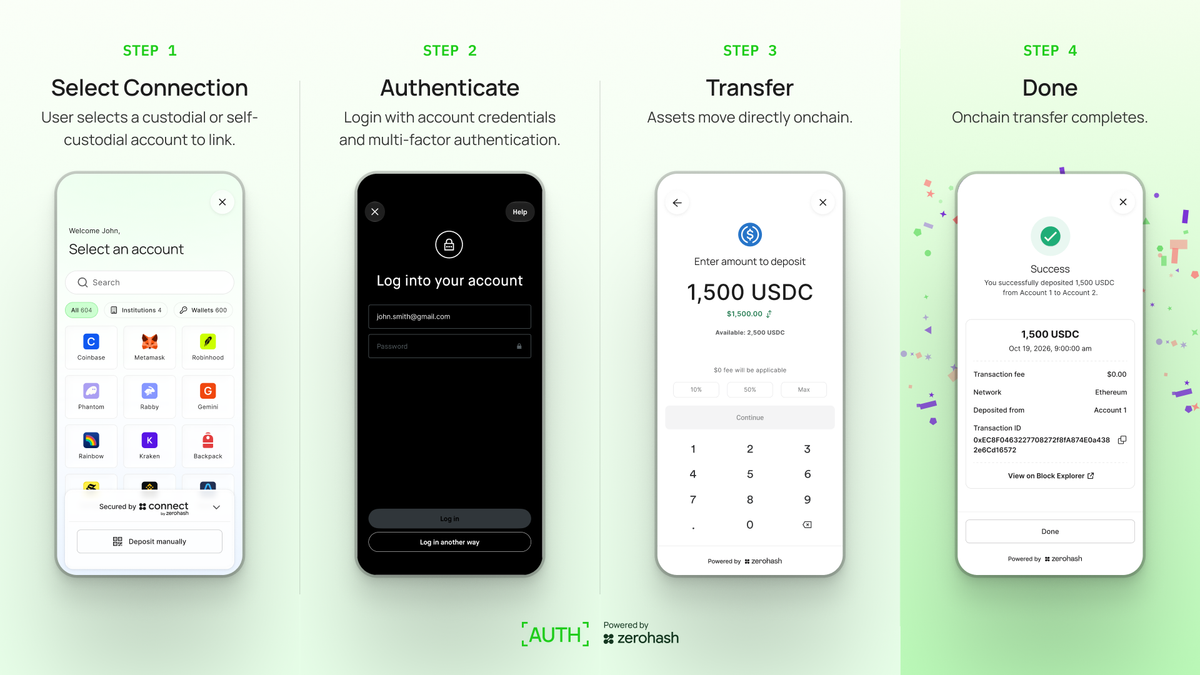
Zerohash has introduced a new tool designed to make cryptocurrency transfers simpler by removing the need for users to manually copy and paste wallet addresses, as the company pursues a federal trust charter in the United States.
The product addresses one of the most persistent sources of friction in digital-asset transactions. Sending cryptocurrency typically requires a user to enter a long, machine-generated wallet address, often made up of a string of letters and numbers. A single misplaced character can direct funds to the wrong destination, while copying an address from an unverified source can expose users to fraud or loss.
By offering an alternative to that process, Zerohash is positioning the new tool as part of a broader effort to make crypto payments operate more like familiar digital payment services. Traditional payment platforms generally allow customers to send money using an email address, phone number, account identifier or contact from an address book. Blockchain transfers, by contrast, have historically depended on technical identifiers that can be difficult for newcomers to understand and verify.
The company has not disclosed all of the product’s technical details, including the specific method it uses to identify recipients or the networks and digital assets supported at launch. Its central purpose, however, is to simplify the transfer experience and reduce the role of manual wallet-address entry.
That change could be significant for businesses offering cryptocurrency services to consumers. Exchanges, fintech companies, payment providers and other platforms must balance the speed and convenience expected by users with the operational risks associated with blockchain transactions. Once a transaction is confirmed on most networks, it generally cannot be reversed through a conventional chargeback process. Improving the way recipients are selected could therefore reduce avoidable mistakes, although it would not eliminate broader risks such as scams, compromised accounts or transfers made to an unintended recipient.
The launch also comes at a notable point in Zerohash’s corporate development. The company is seeking a federal trust charter, a move that would place its operations under the oversight framework associated with federally chartered trust institutions if the application is approved. A charter would not automatically guarantee approval for every service or asset, and the process can involve regulatory review of a company’s governance, compliance systems, capital position, risk controls and custody arrangements.
For digital-asset firms, regulatory status has become an increasingly important part of their business strategy. Companies that provide infrastructure for buying, selling, holding or transferring crypto must demonstrate that they can manage customer assets and comply with rules designed to prevent money laundering, fraud and other financial crimes. A federal charter can offer a uniform regulatory structure across the country, but it also brings supervisory obligations and continuing compliance requirements.
Zerohash has built its business around providing behind-the-scenes infrastructure for companies that want to offer cryptocurrency services without developing the underlying trading, settlement and compliance systems themselves. In that model, a simpler transfer tool could be used by a range of partner platforms rather than only by Zerohash’s own customers. The practical effect will depend on how widely the feature is integrated and whether users find it easier and safer than existing address-based methods.
Wallet addresses remain a core part of blockchain networks because they allow assets to be sent without relying on a central payments database. They also help preserve the open and interoperable design of public blockchains. The challenge for service providers is to build a more accessible user interface around that underlying infrastructure without undermining the security properties of the networks involved.
Several approaches have emerged across the industry, including human-readable names, payment links, QR codes, contact-based transfers and systems that automatically recognize a recipient’s account. Each method introduces its own requirements. A readable name must be linked accurately to a wallet, while contact-based systems may require identity verification, account matching or additional controls to prevent impersonation. The success of any such tool depends not only on convenience but also on how clearly it confirms the intended recipient before a transaction is finalized.
For users, the most important safeguards will remain familiar: checking the recipient, reviewing the asset and network being used, securing account credentials and treating unexpected payment requests with caution. A simplified interface can reduce typing errors, but it cannot determine whether a recipient is trustworthy or whether a transaction is being made under false pretenses.
Zerohash’s new offering therefore reflects two parallel trends in the crypto industry. Providers are working to make blockchain transactions less intimidating for mainstream users, while companies are also seeking more formal regulatory recognition as the sector matures. The tool’s rollout and the company’s charter bid will be watched together, since both speak to the same question: how crypto services can become easier to use while meeting the standards expected of regulated financial infrastructure.


Zerohash Launches Tool for Crypto Transfers Without Manual Wallet Address Entry
Ripple’s DriveWealth Partnership Draws XRP Criticism as RLUSD Gains Prominence

South Korean Court Acquits Jonber Kim in $253 Million Crypto Fraud Case

Gaming Technologies of the New Time!

Calls for Enhanced Discussion on Bitcoin as Brazil’s Reserve Asset: A Move Towards ‘Internet’s Gold’

Bitcoin Declines Below $80K: deVere CEO Nigel Green Remains Bullish on Long-Term Outlook Following Strategic U.S. Bitcoin Reserve Announcement
-
 Press Releases2 years ago
Gaming Technologies of the New Time!
-
 Altcoins2 years ago
Calls for Enhanced Discussion on Bitcoin as Brazil’s Reserve Asset: A Move Towards ‘Internet’s Gold’
-
 Altcoins2 years ago
Bitcoin Declines Below $80K: deVere CEO Nigel Green Remains Bullish on Long-Term Outlook Following Strategic U.S. Bitcoin Reserve Announcement
-

 Bitcoin2 years ago
Bitcoin Surges Past $64K as SEI and POPCAT Lead Daily Crypto Gains on September 25
-

 Bitcoin1 year ago
Peter Schiff เตือนนักลงทุนคริปโตขาย Ethereum (ETH) เพื่อซื้อ Bitcoin ชี้ ETH มีศักยภาพจำกัด
-

 Press Releases2 years ago
Evo Exchange: Redefining the Decentralized Exchange Landscape
-

 Bitcoin1 year ago
Grayscale Investments Submits Draft Registration for IPO, Aiming for Public Trading in U.S.
-

 Press Releases2 years ago
CODE, a Newly Born Project Brings Decentralization Back to the Main Menu