
Altcoins
Senate Democrat Investigates Tether Payments to Bo Hines’ Company

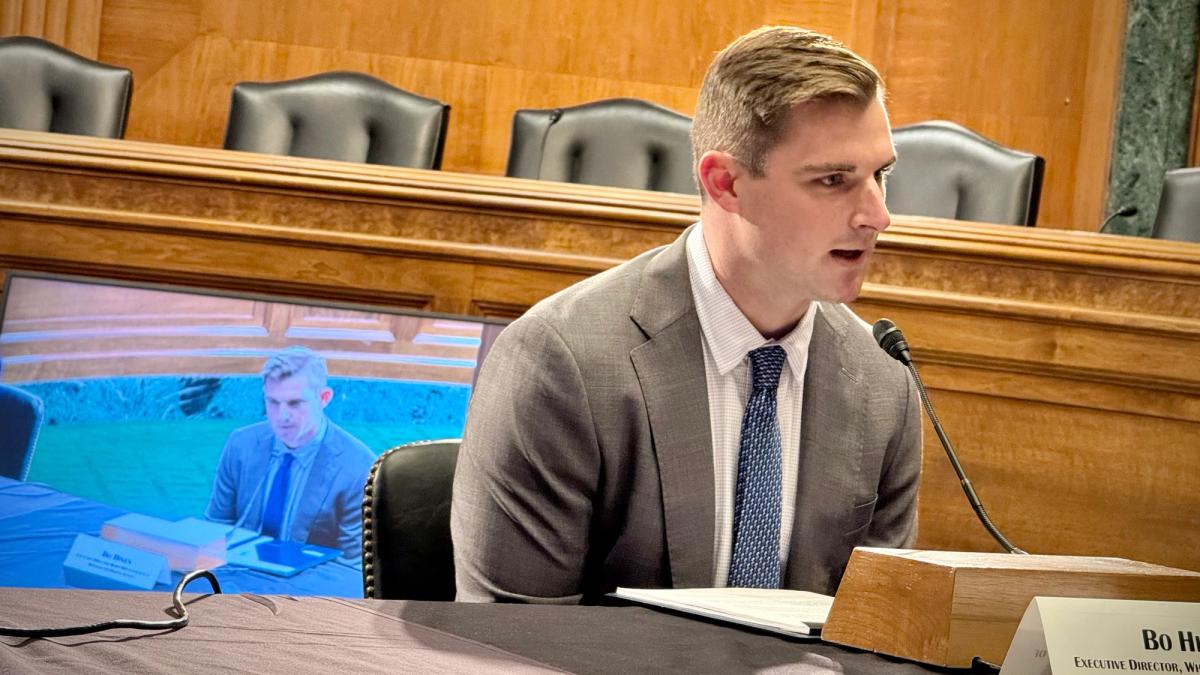
Senator Richard Blumenthal, the top Democrat on the Senate investigations subcommittee, has opened a line of inquiry into payments allegedly made by Tether to a firm linked to Bo Hines, a former White House adviser on cryptocurrency policy.
The inquiry places Hines among the senator’s growing list of crypto-related subjects and adds a new layer of scrutiny to the relationship between digital-asset companies and former government officials. Blumenthal, who serves as the ranking Democratic member of the investigations panel, is examining the payments and the role played by Hines’ firm, according to the source material. The available information does not identify the value, timing or stated purpose of the transactions.
It also does not establish that Hines or Tether violated any law. The focus of the inquiry appears to be the nature of the financial relationship and whether it raises questions about influence, access or potential conflicts involving a former public official who worked on cryptocurrency matters at the White House.
Such questions have become increasingly significant as the crypto industry seeks a larger role in public policy. Digital-asset companies have spent years pressing lawmakers and regulators for clearer rules governing stablecoins, exchanges, custody services and other parts of the market. At the same time, former government officials with experience in financial regulation and technology policy have become sought-after advisers, consultants and business partners.
That movement between government and the private sector can create legitimate questions even when no wrongdoing is alleged. Congressional investigators may seek to determine when a relationship began, what services were provided, how payments were structured and whether the recipient had any influence over public decisions affecting the payer. They may also examine whether required disclosures were made and whether communications between the parties involved official business.
The inquiry concerns Tether, the company behind USDT, the world’s most widely used dollar-linked cryptocurrency. Stablecoins such as USDT are designed to maintain a value tied to a fiat currency, generally the U.S. dollar, and are used extensively for trading, transfers and liquidity across digital-asset markets. Because of their scale and importance to crypto trading, stablecoin issuers have drawn sustained attention from lawmakers, financial regulators and law-enforcement agencies.
Tether has faced extensive public scrutiny over the assets backing USDT and the transparency of its reserves. The company has repeatedly said that its tokens are supported by reserves and has expanded its disclosures and financial reporting over time. Those broader debates form part of the political environment surrounding any investigation involving the company, but they do not by themselves establish a connection between the reserve questions and the payments under review by Blumenthal.
Hines previously served as a White House crypto adviser, making his later association with a private firm of interest to investigators. The source does not specify the dates of his government service, the title of the firm involved or the work it performed for Tether. It also does not indicate whether the inquiry has produced findings, whether documents have been subpoenaed or whether Hines or Tether has responded publicly.
Blumenthal’s role on the investigations subcommittee gives him a platform to request records, seek explanations and pursue testimony as part of congressional oversight. Investigations at this stage can remain exploratory. Lawmakers often begin by asking companies or individuals to provide documents and clarify transactions before deciding whether a matter warrants hearings or more formal action.
The senator has previously shown interest in the cryptocurrency sector, and the Hines matter has now been added to that broader set of concerns. The inquiry could touch on campaign finance, lobbying, consulting arrangements, ethics requirements or the administration of federal crypto policy, depending on what records reveal. None of those issues is established by the opening of the inquiry alone.
The case also highlights the difficulty of defining the boundaries between policy expertise and private influence in an industry still developing its relationship with Washington. Crypto firms often rely on former officials for knowledge of government processes and regulatory priorities. Former officials, meanwhile, may move into private roles where their public experience is commercially valuable. The central issue for investigators is whether those arrangements are transparent and consistent with applicable rules.
Additional details about the payments, including their amount and purpose, will determine the direction of the inquiry. Until those details are made public, the matter remains an examination of a financial relationship involving Tether and a firm connected to a former White House crypto adviser, rather than a finding of misconduct.

Senate Democrat Investigates Tether Payments to Bo Hines’ Company
Tether Partners With Fintech Peso to Expand USDT Retail Payments in Bolivia

Tom Lee Says Bitmine Will Halt Ethereum Purchases Once Holdings Reach 5% of Supply

Gaming Technologies of the New Time!

Calls for Enhanced Discussion on Bitcoin as Brazil’s Reserve Asset: A Move Towards ‘Internet’s Gold’

Bitcoin Declines Below $80K: deVere CEO Nigel Green Remains Bullish on Long-Term Outlook Following Strategic U.S. Bitcoin Reserve Announcement
-
 Press Releases2 years ago
Gaming Technologies of the New Time!
-
 Altcoins2 years ago
Calls for Enhanced Discussion on Bitcoin as Brazil’s Reserve Asset: A Move Towards ‘Internet’s Gold’
-
 Altcoins2 years ago
Bitcoin Declines Below $80K: deVere CEO Nigel Green Remains Bullish on Long-Term Outlook Following Strategic U.S. Bitcoin Reserve Announcement
-

 Bitcoin2 years ago
Bitcoin Surges Past $64K as SEI and POPCAT Lead Daily Crypto Gains on September 25
-

 Bitcoin1 year ago
Peter Schiff เตือนนักลงทุนคริปโตขาย Ethereum (ETH) เพื่อซื้อ Bitcoin ชี้ ETH มีศักยภาพจำกัด
-

 Press Releases2 years ago
Evo Exchange: Redefining the Decentralized Exchange Landscape
-

 Bitcoin1 year ago
Strategy ขยายการถือครองบิตคอยน์สู่ 580,955 BTC หลังจากการซื้อใหม่มูลค่าหลายล้านดอลลาร์
-

 Bitcoin1 year ago
Grayscale Investments Submits Draft Registration for IPO, Aiming for Public Trading in U.S.