
Bitcoin
Bitcoin Reclaims $60,000 as Crypto Liquidations Reach $1.8 Billion

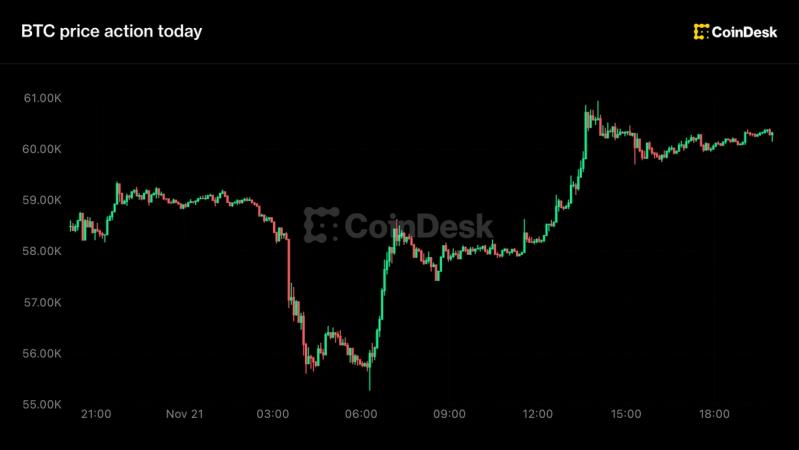
Bitcoin moved back above the $60,000 mark after a sharp selloff triggered roughly $1.8 billion in liquidations across the cryptocurrency market, with bullish traders bearing most of the losses.
The liquidation wave highlights the risks of leveraged trading, in which investors borrow funds or use derivatives to take positions larger than the capital they have deposited. When prices move against those positions, exchanges can automatically close them once traders no longer have enough collateral to support their bets. The forced closures can then add further selling pressure, accelerating a decline that may have begun with a relatively smaller move.
Most of the positions removed during the selloff were long trades, meaning they had been placed in expectation that digital-asset prices would continue rising. The scale of those losses suggests that a large number of market participants had positioned for an advance and were caught off guard when prices turned lower. Rather than choosing to exit voluntarily, many of those traders saw their positions closed automatically as margin requirements were breached.
Bitcoin’s recovery above $60,000 came after that intense bout of forced selling. Such rebounds can occur when the liquidation process removes heavily exposed positions from the market. Once those trades have been closed, the immediate pressure created by automatic selling may ease, allowing buyers to step in. A rebound, however, does not necessarily mean that the market has returned to a stable upward trend. Prices can remain volatile as traders reassess risk and determine whether the recovery is supported by fresh demand.
Liquidations are a central feature of crypto derivatives markets. Unlike a conventional spot trade, where an investor purchases an asset outright, leveraged products allow a trader to control a larger position with a smaller amount of money. That structure can magnify gains when prices move in the desired direction, but it also increases losses when the market moves against the position. In extreme cases, even a relatively modest decline can eliminate the trader’s deposited collateral.
The latest episode was concentrated largely among bullish positions. That distinction matters because long liquidations can create a self-reinforcing cycle. Falling prices weaken leveraged long trades, exchanges close those positions, and the resulting orders add to downward momentum. Other traders may then respond by reducing exposure or opening bearish positions, intensifying the move before the market eventually finds buyers.
The rebound above $60,000 therefore reflects two competing forces. On one side, the liquidation event reduced the amount of outstanding leverage tied to rising prices. On the other, the speed and size of the selloff may leave investors cautious about immediately rebuilding similar positions. Traders who suffered forced closures may be reluctant to return, while those who remained on the sidelines may wait for clearer evidence that price conditions have steadied.
The episode also serves as a reminder that headline price levels can obscure the amount of risk accumulating beneath the surface. A market may appear strong while large numbers of traders are relying on borrowed capital and derivatives to increase their exposure. When sentiment shifts, the resulting losses can spread quickly across multiple digital assets, even if the initial decline is focused on a narrower group of positions.
For the broader crypto market, the $1.8 billion liquidation figure represents more than a measure of individual trading losses. It indicates how closely price movements, leverage and investor positioning are linked. A heavily crowded market can produce dramatic declines when traders are positioned in the same direction, while a subsequent recovery may be amplified by the removal of those vulnerable bets.
Bitcoin’s return above $60,000 gives the market a temporary point of stability after the liquidation shock, but it does not erase the losses incurred during the selloff. The next phase will depend on whether buyers continue supporting prices and whether traders rebuild leverage at a more cautious pace. Until that becomes clearer, the episode is likely to remain a warning about the consequences of placing oversized bullish bets in a market capable of moving sharply in a short period.

Bitcoin Reclaims $60,000 as Crypto Liquidations Reach $1.8 Billion
Former Ripple CTO Challenges $1,000 XRP Forecast as Holders Scrutinize His Token Sales

Wells Fargo Tops U.S. Institutional Bitcoin Holdings as Total Reaches 356,000, Galaxy Says
-

 Press Releases2 years ago
Gaming Technologies of the New Time!
-

 Altcoins2 years ago
Bybit announces it will stop withdrawing services in France from January 8, 2025 after regulatory changes
-

 Altcoins2 years ago
FBI เชื่อมโยงนักแสดงเกาหลีเข้ากับการแฮ็ก DMM Exchange มูลค่า 308 ล้านดอลลาร์
-

 Altcoins2 years ago
Calls for Enhanced Discussion on Bitcoin as Brazil’s Reserve Asset: A Move Towards ‘Internet’s Gold’
-

 Bitcoin1 year ago
Peter Schiff เตือนนักลงทุนคริปโตขาย Ethereum (ETH) เพื่อซื้อ Bitcoin ชี้ ETH มีศักยภาพจำกัด
-

 Bitcoin2 years ago
5 สกุลเงินคริปโตที่ควรซื้อ เมื่อบริษัท MicroStrategy ของจีนเริ่มสะสม Bitcoin
-

 Bitcoin2 years ago
Bitcoin ETF ประสบปัญหาใหญ่ออกเงินสูงถึง 1 พันล้านดอลลาร์ในวันเดียว
-

 Altcoins2 years ago
Gemini ประกาศเพิ่มการซื้อขายเหรียญ Stablecoin RLUSD ของ Ripple