
Altcoins
Issuer-Linked Wallet Sale Sends Wrapped Monero Down 99% on $13.5 Million Dump

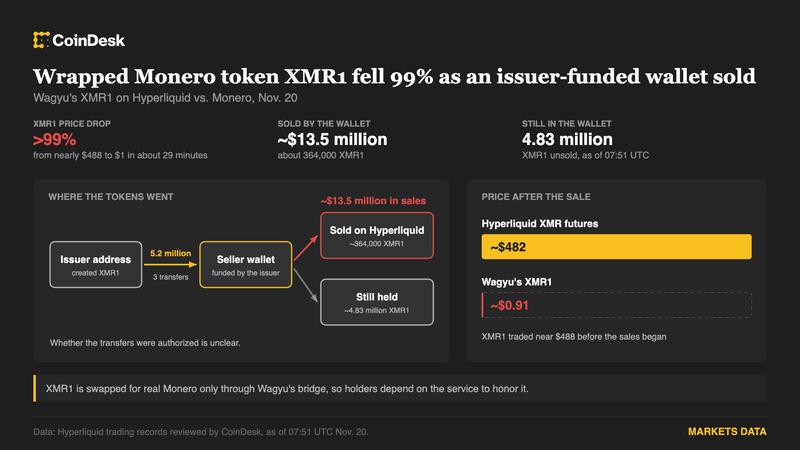
Wagyu’s wrapped Monero token, XMR1, suffered a near-total collapse after a wallet linked to the token’s issuer sold approximately $13.5 million worth of the asset. The sell-off drove XMR1 down by about 99%, sharply separating its market performance from that of Monero itself.
The episode concerns XMR1, a token issued to represent exposure to Monero in a wrapped form. It does not involve native Monero, the privacy-focused cryptocurrency that trades under the XMR ticker on conventional crypto markets. Nor does it refer to Hyperliquid’s XMR futures market, where traders speculate on Monero’s price through derivative contracts rather than by buying the underlying asset.
That distinction is important because the collapse in XMR1 does not, by itself, indicate that Monero’s broader market has suffered a comparable loss. Wrapped assets depend not only on the value of the underlying cryptocurrency but also on the mechanisms used to issue, redeem and support the wrapped token. A large transaction involving an issuer-associated wallet can therefore have an outsized effect, particularly when liquidity is limited.
The selling was traced to a wallet connected with the token’s issuer, according to the information surrounding the transaction. The wallet’s disposal of roughly $13.5 million in XMR1 created intense downward pressure. As the token’s price fell, the decline appears to have accelerated, leaving the asset trading at only a small fraction of its previous value.
Unlike native Monero, which is secured by its own blockchain and distributed network, a wrapped token relies on an intermediary or issuing structure. The issuer generally creates the wrapped representation on another blockchain while maintaining a corresponding claim or reserve arrangement for the original asset. Market participants consequently assess more than the price of Monero when trading such instruments. They also consider whether the token can be redeemed, how reserves are managed and how much liquidity is available for exits.
Those structural differences can make wrapped assets especially vulnerable to concentrated selling. If one wallet controls a substantial portion of available supply, a large sale may overwhelm buyers and produce a sharp price dislocation. In a thin market, automated trading systems can add to the movement by reacting to falling prices, widening spreads or removing bids. A token may then lose most of its quoted value even when the underlying cryptocurrency has not experienced a similar move.
The incident also highlights the risk of relying on ticker symbols without checking the specific market. XMR1 and XMR may appear closely related, but they represent different instruments. XMR is Monero’s native coin. XMR1 is Wagyu’s wrapped token, while an XMR futures contract on Hyperliquid is a derivative whose value is linked to expectations about Monero’s price. Their prices, liquidity and trading risks can differ substantially.
For investors, the 99% plunge raises questions about the relationship between the token’s market price and the asset it was designed to represent. In a functioning wrapped-token market, arbitrage traders typically help keep the wrapped version near the value of the underlying asset. When a token trades below that implied value, they may attempt to buy it cheaply and redeem or otherwise convert it, helping close the gap. That process depends on reliable redemption procedures, sufficient reserves and an active pool of buyers and sellers.
A breakdown in any of those conditions can allow the discount to widen. The sale linked to the issuer-associated wallet appears to have exposed the extent to which XMR1’s valuation depended on available liquidity and market confidence. However, the available information does not establish whether the transaction represented a planned liquidation, a redemption-related event, a treasury movement or another form of transfer. It also does not demonstrate that the sale reflected a change in Monero’s fundamentals.
The incident is another reminder that a wrapped asset carries an additional layer of counterparty and operational risk. Buyers are not simply taking a position on the underlying cryptocurrency. They are also relying on the issuer, the custody or reserve model, the smart contracts supporting the token and the venues where it trades. Problems involving any one of those elements can affect the wrapped instrument independently of the original asset.
As a result, the collapse in XMR1 should be read as an event specific to Wagyu’s token and its market structure, rather than as a direct measure of Monero’s overall performance. The distinction between the wrapped token, native XMR and Hyperliquid’s futures market remains central to understanding what actually fell and which risks were exposed by the $13.5 million sale.

Issuer-Linked Wallet Sale Sends Wrapped Monero Down 99% on $13.5 Million Dump

Scattered Spider Hacker Receives Six-Year Sentence for $11.6 Million Cryptocurrency Theft
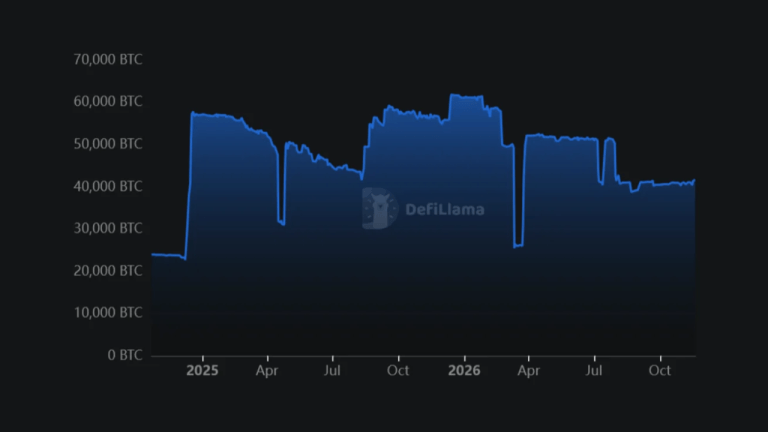
Babylon Considers Ending Bitcoin Staking, Leaving $2.6B in BTC in Limbo

Gaming Technologies of the New Time!

Bybit announces it will stop withdrawing services in France from January 8, 2025 after regulatory changes

Calls for Enhanced Discussion on Bitcoin as Brazil’s Reserve Asset: A Move Towards ‘Internet’s Gold’
-
 Press Releases2 years ago
Gaming Technologies of the New Time!
-
 Altcoins2 years ago
Bybit announces it will stop withdrawing services in France from January 8, 2025 after regulatory changes
-
 Altcoins2 years ago
Calls for Enhanced Discussion on Bitcoin as Brazil’s Reserve Asset: A Move Towards ‘Internet’s Gold’
-

 Altcoins2 years ago
FBI เชื่อมโยงนักแสดงเกาหลีเข้ากับการแฮ็ก DMM Exchange มูลค่า 308 ล้านดอลลาร์
-

 Bitcoin1 year ago
Peter Schiff เตือนนักลงทุนคริปโตขาย Ethereum (ETH) เพื่อซื้อ Bitcoin ชี้ ETH มีศักยภาพจำกัด
-

 Bitcoin2 years ago
5 สกุลเงินคริปโตที่ควรซื้อ เมื่อบริษัท MicroStrategy ของจีนเริ่มสะสม Bitcoin
-

 Bitcoin2 years ago
Bitcoin ETF ประสบปัญหาใหญ่ออกเงินสูงถึง 1 พันล้านดอลลาร์ในวันเดียว
-

 Altcoins2 years ago
Bitcoin Declines Below $80K: deVere CEO Nigel Green Remains Bullish on Long-Term Outlook Following Strategic U.S. Bitcoin Reserve Announcement