
Altcoins
Scattered Spider Hacker Receives Six-Year Sentence for $11.6 Million Cryptocurrency Theft


Tyler Robert Buchanan, a 24-year-old from Dundee, Scotland, has been sentenced to six years in federal prison for his role in a cryptocurrency theft scheme that prosecutors said used phishing text messages to target employees at companies across the United States.
The sentence completes the criminal proceedings against all five defendants connected to the case. Together, the group stole at least $11.6 million in digital assets from victims, according to the case details. The operation relied on deceptive messages designed to persuade employees to surrender information that could be used to gain access to cryptocurrency accounts and other digital holdings.
Buchanan’s imprisonment represents the final sentence handed down in a prosecution involving the group sometimes referred to as “Scattered Spider.” The label has been associated with cybercriminal activity involving social engineering, a method that focuses less on breaking through technical defenses and more on manipulating people into providing access.
Phishing schemes can take many forms, including emails, phone calls and text messages. In this case, the attackers used text messages sent to company employees. Such messages can appear routine or urgent, encouraging recipients to respond quickly, click a link or share account information. Once attackers obtain credentials or other sensitive details, they may be able to move into corporate systems or access cryptocurrency wallets and accounts.
Digital currencies are particularly attractive targets for cybercriminals because transactions can move rapidly and, in many cases, cannot be reversed after they are authorized. Unlike a credit-card payment, a cryptocurrency transfer may not have a bank or card issuer capable of canceling the transaction and restoring the funds. The speed and finality of blockchain transactions can therefore magnify the damage caused by a successful social-engineering attack.
The prosecution centered on losses suffered by people in the United States. The stolen cryptocurrency was valued at no less than $11.6 million, though the source of the case information did not provide a more detailed breakdown of the individual victims’ losses or identify the digital assets involved.
Buchanan’s six-year federal sentence follows the resolution of the cases against the other four defendants. The available account does not specify the sentences imposed on those individuals, their names, or the precise roles prosecutors attributed to each member of the group. It does establish that Buchanan’s punishment was the last in the case, bringing the sentencing process for all five defendants to an end.
The case highlights the continuing role of employees in the security of businesses that hold or handle valuable digital assets. Companies may invest heavily in network defenses, authentication systems and monitoring tools, yet attackers can still seek out employees as the most direct route to sensitive accounts. A convincing message, particularly one that appears to come from a supervisor, technology department or trusted service, can prompt a victim to disclose information before warning signs are recognized.
Cryptocurrency-related thefts also create investigative challenges. Digital transactions are recorded on public blockchains, but a wallet address does not automatically reveal the identity of the person controlling it. Investigators may need to trace transfers across multiple addresses, examine communications and connect online activity with real-world individuals. Funds can be moved through exchanges, intermediary wallets or other services in an effort to make their origin more difficult to follow.
The use of text messages in the scheme reflects a broader shift in phishing tactics. Criminal groups increasingly use mobile communications because people often treat text messages as more immediate and personal than conventional email. A message that warns of an account problem or requests urgent confirmation can exploit that expectation. Security specialists generally advise recipients to verify unexpected requests independently and avoid using links supplied in unsolicited messages, but the prosecution illustrates the financial consequences when such deception succeeds.
Buchanan will now serve his six-year term in the federal prison system. His sentencing closes the final stage of a case that involved at least five defendants and millions of dollars in cryptocurrency losses, while underscoring how social engineering can turn ordinary workplace communications into a gateway for large-scale financial theft.

Scattered Spider Hacker Receives Six-Year Sentence for $11.6 Million Cryptocurrency Theft
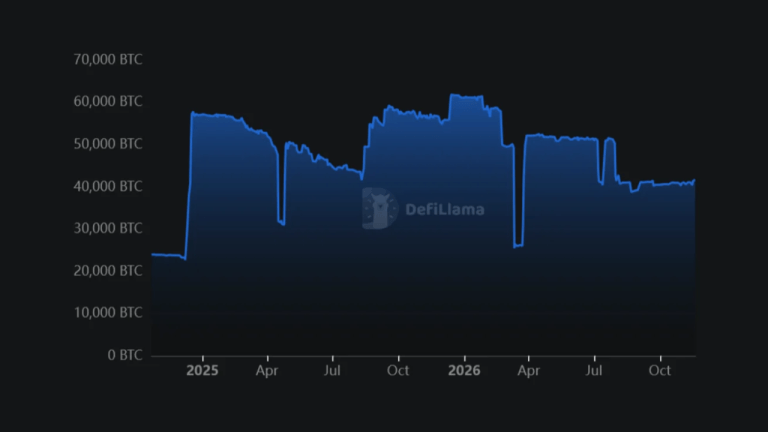
Babylon Considers Ending Bitcoin Staking, Leaving $2.6B in BTC in Limbo
GTA 6 Takes 84% Favorite Status in Polymarket’s Game of the Year Market

Gaming Technologies of the New Time!

Bybit announces it will stop withdrawing services in France from January 8, 2025 after regulatory changes

Calls for Enhanced Discussion on Bitcoin as Brazil’s Reserve Asset: A Move Towards ‘Internet’s Gold’
-
 Press Releases2 years ago
Gaming Technologies of the New Time!
-
 Altcoins2 years ago
Bybit announces it will stop withdrawing services in France from January 8, 2025 after regulatory changes
-
 Altcoins2 years ago
Calls for Enhanced Discussion on Bitcoin as Brazil’s Reserve Asset: A Move Towards ‘Internet’s Gold’
-

 Altcoins2 years ago
FBI เชื่อมโยงนักแสดงเกาหลีเข้ากับการแฮ็ก DMM Exchange มูลค่า 308 ล้านดอลลาร์
-

 Bitcoin1 year ago
Peter Schiff เตือนนักลงทุนคริปโตขาย Ethereum (ETH) เพื่อซื้อ Bitcoin ชี้ ETH มีศักยภาพจำกัด
-

 Bitcoin2 years ago
5 สกุลเงินคริปโตที่ควรซื้อ เมื่อบริษัท MicroStrategy ของจีนเริ่มสะสม Bitcoin
-

 Bitcoin2 years ago
Bitcoin ETF ประสบปัญหาใหญ่ออกเงินสูงถึง 1 พันล้านดอลลาร์ในวันเดียว
-

 Altcoins2 years ago
Bitcoin Declines Below $80K: deVere CEO Nigel Green Remains Bullish on Long-Term Outlook Following Strategic U.S. Bitcoin Reserve Announcement