
Altcoins
Robinhood Supports Tokenized Stock Listing on OKX–ICE as Most Firms Decline Participation


Robinhood has signaled support for tokenizing its own stock on a platform being developed through a partnership between cryptocurrency exchange OKX and Intercontinental Exchange, the financial infrastructure group behind major market venues. The position places the brokerage among the companies willing to participate in an emerging form of digital-market infrastructure, despite early resistance from many other businesses.
The disagreement highlights a broader debate over how publicly traded shares should be represented and traded in blockchain-based markets. While supporters argue that tokenization could make equities easier to access and trade across borders, many companies remain reluctant to endorse systems whose legal, regulatory and operational frameworks are still developing.
Robinhood’s view is that the industry will benefit more from helping shape those systems than from remaining on the sidelines. The brokerage has increasingly positioned itself as a bridge between conventional investing and digital assets, making its support for a tokenized version of its stock consistent with its broader strategy.
Tokenized securities are digital representations of financial assets recorded on a blockchain or another distributed ledger. In theory, such instruments could allow investors to gain exposure to shares through digital platforms, potentially extending trading access beyond traditional brokerage infrastructure. Depending on how a product is structured, tokenization may also support faster settlement, automated compliance functions and more flexible trading arrangements.
Those potential advantages, however, do not eliminate the legal status of the underlying asset. A token that references a company’s shares may not necessarily provide the same voting, dividend or ownership rights as a conventional share held through a regulated broker. The exact rights attached to a token depend on the legal and technical structure of the offering, as well as the jurisdiction in which it is made available.
That distinction has contributed to the cautious response from companies approached by the OKX–ICE initiative. Corporate participation in a tokenized market can raise questions about shareholder records, transfer restrictions, investor protection, disclosure obligations and the relationship between digital trading venues and established exchanges. Companies may also be wary of lending their names to a market whose rules and oversight arrangements are not yet fully settled.
The early pushback therefore reflects more than skepticism about cryptocurrency. It also shows how companies are weighing the practical consequences of linking their publicly traded securities to a new distribution channel. Boards and legal advisers must consider whether tokenization expands investor access, creates additional compliance responsibilities or risks confusing investors about what they actually own.
For Robinhood, the calculation appears to be different. The company’s public support suggests that it sees participation as a way to influence the design of tokenized markets while the sector is still taking shape. Rather than waiting for digital equity trading to mature outside the traditional financial system, the brokerage appears prepared to test how established market participants might engage with it.
That approach reflects the changing role of brokerages in financial markets. Firms that once focused primarily on executing trades now compete across stocks, options, cryptocurrencies and other digital products. Robinhood has been one of the most visible companies in that transition, particularly among retail investors who increasingly expect financial services to be available through a single digital account.
The proposed involvement of ICE gives the initiative an additional connection to established market infrastructure. ICE operates major financial-market businesses, including exchanges and clearing-related services, and its participation places the project within a conversation that extends beyond crypto-native platforms. OKX, meanwhile, brings experience in digital-asset trading and blockchain-based products. Their partnership combines two distinct areas of finance, although the source material does not specify the final design, launch timetable or regulatory structure of the planned platform.
Those unresolved details will be important. A tokenized market must determine how assets are issued, who verifies ownership, how trades are settled and what happens if a token holder seeks to exercise rights associated with the underlying security. It must also establish how the platform interacts with existing brokers, custodians, transfer agents and regulators.
Market participants will be watching whether Robinhood’s support encourages other public companies to reconsider their positions. If additional issuers participate, tokenized equity markets could gain greater liquidity and credibility. If most companies continue to opt out, platforms may struggle to offer a broad selection of assets, limiting their usefulness to investors.
The split between Robinhood and the companies resisting the initiative also underlines the uncertainty surrounding financial innovation. Early adopters may see an opportunity to shape new standards and reach investors through unfamiliar channels. More cautious companies may prefer to wait until regulators clarify the rules and the commercial benefits become easier to measure.
For now, Robinhood’s stance is best understood as an endorsement of experimentation rather than proof that tokenized shares are ready to replace conventional equities. The brokerage is backing the effort to build a market around digital representations of stocks, even as much of the corporate sector remains unconvinced. The outcome will depend on whether the project can address the concerns surrounding ownership, investor protections and oversight while demonstrating that tokenization offers advantages beyond simply placing familiar assets on a blockchain.

XRP Analyst Projects $10 Target as New York Stock Exchange Deal Boosts Adoption Prospects
Robinhood Supports Tokenized Stock Listing on OKX–ICE as Most Firms Decline Participation
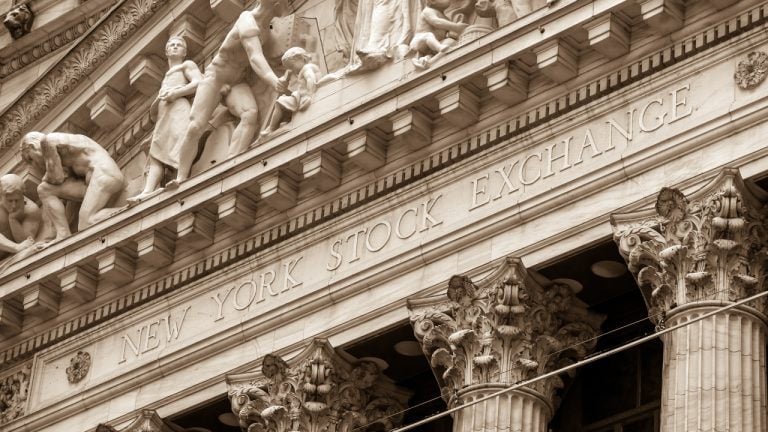
NYSE Taps Avalanche to Enable 24/7 Tokenized Stock Trading

Gaming Technologies of the New Time!

Calls for Enhanced Discussion on Bitcoin as Brazil’s Reserve Asset: A Move Towards ‘Internet’s Gold’

Bybit announces it will stop withdrawing services in France from January 8, 2025 after regulatory changes
-
 Press Releases2 years ago
Gaming Technologies of the New Time!
-
 Altcoins2 years ago
Calls for Enhanced Discussion on Bitcoin as Brazil’s Reserve Asset: A Move Towards ‘Internet’s Gold’
-
 Altcoins2 years ago
Bybit announces it will stop withdrawing services in France from January 8, 2025 after regulatory changes
-
 Bitcoin1 year ago
Peter Schiff เตือนนักลงทุนคริปโตขาย Ethereum (ETH) เพื่อซื้อ Bitcoin ชี้ ETH มีศักยภาพจำกัด
-

 Altcoins2 years ago
FBI เชื่อมโยงนักแสดงเกาหลีเข้ากับการแฮ็ก DMM Exchange มูลค่า 308 ล้านดอลลาร์
-

 Altcoins2 years ago
Bitcoin Declines Below $80K: deVere CEO Nigel Green Remains Bullish on Long-Term Outlook Following Strategic U.S. Bitcoin Reserve Announcement
-
 Bitcoin2 years ago
Bitcoin Surges Past $64K as SEI and POPCAT Lead Daily Crypto Gains on September 25
-

 Bitcoin2 years ago
Bitcoin ETF ประสบปัญหาใหญ่ออกเงินสูงถึง 1 พันล้านดอลลาร์ในวันเดียว