
Bitcoin
Deutsche Bank Advances Toward Institutional Bitcoin and Ether Custody Rollout

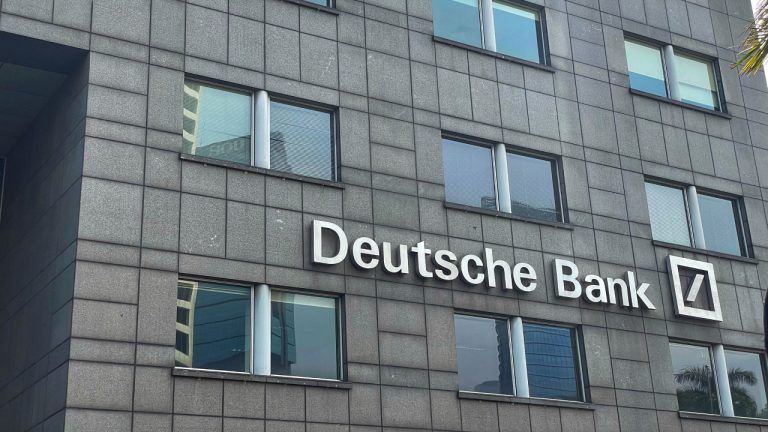
Deutsche Bank is moving closer to launching a cryptocurrency custody service for institutional clients in Germany, a step that would place the country’s largest banking institutions more directly in the digital-asset market.
The planned service is expected to focus initially on the custody of Bitcoin and Ether, the two best-known assets in the cryptocurrency sector. Custody services are designed to hold and safeguard digital assets on behalf of clients, while also supporting the operational processes required to manage them. For institutional investors, those arrangements can be important because they seek formal controls, security procedures and established banking relationships before committing capital to digital assets.
Deutsche Bank has presented the initiative as part of a wider effort to expand its corporate banking business. The bank is targeting compound annual growth of 8% in its corporate banking services through 2028. Its digital-asset plans are therefore being positioned not as a separate departure from the bank’s traditional activities, but as an additional service intended to complement them.
Gerald Podobnik, Deutsche Bank’s co-head, said the new services would sit alongside the bank’s existing offerings. His comments indicate that the bank views cryptocurrency custody as an extension of its role in serving corporate and institutional customers rather than as a replacement for conventional banking products.
The announcement reflects the growing interest among major financial institutions in providing regulated infrastructure for digital assets. Institutional participation in the cryptocurrency market has increased pressure on banks to offer services that cover more than trading or investment exposure. Secure custody, account administration and related support are increasingly viewed as necessary parts of a broader institutional market.
For Deutsche Bank, entering the custody market would also allow it to respond to demand from clients that want access to digital assets within familiar banking frameworks. Traditional financial institutions can offer established compliance systems, risk-management procedures and client reporting capabilities. Those features are particularly relevant to companies and professional investors that may be reluctant to rely solely on specialist crypto platforms.
The bank has not provided further details in the available announcement about the exact launch date, the size of the initial offering or the full range of assets that could eventually be supported. The focus identified so far is Bitcoin and Ether. It also remains unclear how the service will be structured operationally, including whether Deutsche Bank will build all of the required technology itself or work with external providers.
Bitcoin and Ether account for a substantial share of institutional attention in the digital-asset market, although they serve different roles within the ecosystem. Bitcoin is widely regarded by investors as the sector’s most established asset, while Ether is tied to the Ethereum blockchain and its broader network of applications. Offering custody for both would give institutional clients exposure to two of the market’s most prominent digital assets through a single banking relationship.
The timing of Deutsche Bank’s move comes as financial regulators and banks continue to develop their approach to cryptocurrency services. Digital assets present operational and regulatory challenges that differ from those associated with conventional securities. Private-key protection, transaction finality, cyber risk and the handling of blockchain-based transfers all require specialized controls. A bank entering the field must also manage questions surrounding customer identification, sanctions compliance and the movement of assets across different digital networks.
Those issues help explain why institutional custody has become a central area of competition in financial services. Investors may be able to purchase digital assets through a variety of platforms, but holding them securely and demonstrating appropriate internal controls can be more complex. A major bank’s participation can potentially make the market more accessible to corporations and institutions that require a higher level of governance.
Deutsche Bank’s plan also signals that digital assets are being considered within broader corporate banking strategies. Instead of treating cryptocurrencies solely as speculative instruments, banks are examining the practical services surrounding them. Custody is one of the clearest examples because it can be linked to account management, transaction services and other activities already familiar to corporate banking clients.
The proposed launch does not, by itself, indicate that Deutsche Bank is endorsing any particular cryptocurrency investment strategy. Rather, it suggests that the bank intends to provide infrastructure for clients that choose to hold digital assets. The distinction is significant: custody providers safeguard and administer assets, while investment decisions remain with the clients and their advisers.
As the bank works toward its 2028 growth objective, the cryptocurrency service could become one element of a broader effort to modernize corporate banking and meet changing client requirements. The eventual scale of the business will depend on demand, regulatory developments and the bank’s ability to integrate digital-asset controls with its existing systems.
For now, Deutsche Bank’s confirmation marks an advance toward a formal institutional custody offering in Germany. By concentrating initially on Bitcoin and Ether and linking the project to its established corporate banking franchise, the bank is seeking to enter the digital-asset market through services that build on its traditional financial role.
Vitalik Buterin Warns Binance Fallout Could Make Crypto Hack Victims Appear to Fund North Korea

Thailand Moves to Restrict Bitget as Local Acquisition Deal Remains Unresolved

JPMorgan Puts Bitcoin at the Top of Its Return Outlook as Grayscale Gains Notice
-

 Press Releases2 years ago
Gaming Technologies of the New Time!
-

 Altcoins2 years ago
Calls for Enhanced Discussion on Bitcoin as Brazil’s Reserve Asset: A Move Towards ‘Internet’s Gold’
-

 Bitcoin1 year ago
Peter Schiff เตือนนักลงทุนคริปโตขาย Ethereum (ETH) เพื่อซื้อ Bitcoin ชี้ ETH มีศักยภาพจำกัด
-

 Altcoins2 years ago
Bitcoin Declines Below $80K: deVere CEO Nigel Green Remains Bullish on Long-Term Outlook Following Strategic U.S. Bitcoin Reserve Announcement
-

 Altcoins2 years ago
Bybit announces it will stop withdrawing services in France from January 8, 2025 after regulatory changes
-

 Altcoins2 years ago
FBI เชื่อมโยงนักแสดงเกาหลีเข้ากับการแฮ็ก DMM Exchange มูลค่า 308 ล้านดอลลาร์
-

 Bitcoin2 years ago
Bitcoin Surges Past $64K as SEI and POPCAT Lead Daily Crypto Gains on September 25
-

 Bitcoin2 years ago
Bitcoin ETF ประสบปัญหาใหญ่ออกเงินสูงถึง 1 พันล้านดอลลาร์ในวันเดียว