
Altcoins
Senators Demand CFTC Answers on Geoblocking Amid Reported Kalshi and Polymarket Probes

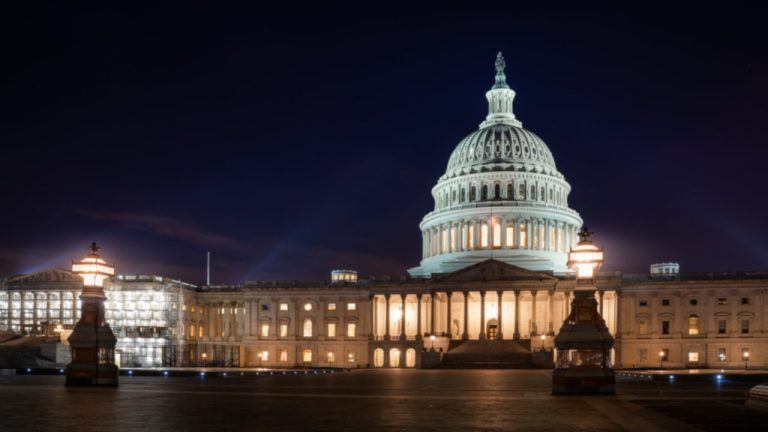
Nine Democratic senators are pressing the Commodity Futures Trading Commission to withdraw an order involving state-imposed geoblocks on prediction-market platforms, arguing that the agency’s position conflicts with existing court rulings.
The intervention adds to growing scrutiny of the CFTC’s approach to online event-contract markets, a sector that has expanded rapidly as companies offer users the opportunity to trade contracts tied to elections, sports, economic indicators and other real-world outcomes. The lawmakers’ letter also comes as Politico reports that the regulator is examining the activities of Kalshi and Polymarket, two of the most prominent names in the market.
According to the senators, the CFTC’s order could undermine state efforts to restrict access to prediction-market products within their jurisdictions. They argue that the agency should reconsider or rescind the directive because it does not align with decisions issued by the courts. The letter places the dispute within a broader fight over whether federal regulators or individual states should determine where and how prediction-market contracts may be offered.
The disagreement centers on geoblocking, a technical system used to prevent users in specific locations from accessing a website or financial product. For prediction-market operators, geoblocking can be used to exclude residents of states where regulators believe certain contracts are prohibited or insufficiently supervised. State officials have increasingly viewed that tool as important for enforcing local gambling, securities or consumer-protection rules, while companies and federal authorities have sought a more uniform national framework.
The senators’ request challenges the CFTC’s authority and policy direction without necessarily rejecting prediction markets altogether. Instead, the letter focuses on the relationship between federal oversight and state restrictions. The lawmakers contend that an agency order limiting or opposing state geoblocks is inconsistent with court orders that, in their view, recognize the role of states in regulating activity within their borders.
The dispute reflects the unusual legal status of prediction markets. Platforms generally describe their products as federally regulated event contracts rather than traditional wagers. That distinction is significant because the CFTC oversees derivatives markets, including futures and certain event-based contracts, while states retain broad authority over gambling and other forms of consumer activity. The classification of a contract can therefore determine which regulator has jurisdiction and what rules apply.
Kalshi has pursued a federal regulatory strategy, presenting itself as a CFTC-regulated exchange. The company has sought to list contracts tied to major public events, including political outcomes, and has previously faced resistance from state regulators and other government authorities. Polymarket, meanwhile, has become a major crypto-linked prediction platform, although its regulatory history and operating structure differ from Kalshi’s. The two companies are often discussed together because of their prominence, but they do not operate under identical legal arrangements.
Politico’s report that the CFTC is investigating Kalshi and Polymarket introduces another layer of uncertainty for the industry. The report does not, by itself, establish that either company violated the law, and an investigation can examine a wide range of issues without leading to enforcement action. Still, the reported inquiries suggest that federal officials are taking a closer look at how prediction markets operate, how contracts are marketed and whether platforms comply with applicable rules.
For the companies, the outcome could affect both their geographic reach and the types of contracts they are able to offer. A requirement to block users in particular states could raise compliance costs and create a fragmented market, with access varying according to a customer’s location. A federal policy that limits state geoblocking efforts could produce the opposite result, allowing platforms to offer products nationwide while making it more difficult for state authorities to enforce their own restrictions.
The senators’ letter therefore places pressure on the CFTC at a sensitive moment. The agency must navigate competing demands from financial-market participants, state regulators, courts and lawmakers while deciding how event contracts fit within the existing derivatives framework. The controversy also highlights the difficulty of applying older regulatory categories to internet-based platforms that can attract large numbers of users quickly and operate across state lines.
The letter’s argument that the order clashes with court rulings could ultimately push the issue back into litigation if the CFTC does not change course. Until the legal questions are resolved, prediction-market operators are likely to face continued uncertainty over which rules govern access to their platforms and whether federal approval can override state-level restrictions.
The congressional pressure and reported investigations do not necessarily signal a unified federal position on Kalshi or Polymarket. They do, however, show that the regulatory debate has moved beyond questions about individual contracts. It now includes the broader issue of who controls the digital prediction-market economy: a federal agency seeking consistent national oversight, or states insisting on the ability to restrict products available to their residents.

Senators Demand CFTC Answers on Geoblocking Amid Reported Kalshi and Polymarket Probes
Coinbase CEO Predicts AI Agents Will Drive 99.9% of Transactions Within 10 Years

Twenty One Capital Boosts Treasury With $10 Million Bitcoin Acquisition

Gaming Technologies of the New Time!

Calls for Enhanced Discussion on Bitcoin as Brazil’s Reserve Asset: A Move Towards ‘Internet’s Gold’

Bybit announces it will stop withdrawing services in France from January 8, 2025 after regulatory changes
-
 Press Releases2 years ago
Gaming Technologies of the New Time!
-
 Altcoins2 years ago
Calls for Enhanced Discussion on Bitcoin as Brazil’s Reserve Asset: A Move Towards ‘Internet’s Gold’
-
 Altcoins2 years ago
Bybit announces it will stop withdrawing services in France from January 8, 2025 after regulatory changes
-

 Altcoins2 years ago
FBI เชื่อมโยงนักแสดงเกาหลีเข้ากับการแฮ็ก DMM Exchange มูลค่า 308 ล้านดอลลาร์
-

 Bitcoin1 year ago
Peter Schiff เตือนนักลงทุนคริปโตขาย Ethereum (ETH) เพื่อซื้อ Bitcoin ชี้ ETH มีศักยภาพจำกัด
-

 Bitcoin2 years ago
5 สกุลเงินคริปโตที่ควรซื้อ เมื่อบริษัท MicroStrategy ของจีนเริ่มสะสม Bitcoin
-

 Bitcoin2 years ago
Bitcoin ETF ประสบปัญหาใหญ่ออกเงินสูงถึง 1 พันล้านดอลลาร์ในวันเดียว
-

 Altcoins2 years ago
Bitcoin Declines Below $80K: deVere CEO Nigel Green Remains Bullish on Long-Term Outlook Following Strategic U.S. Bitcoin Reserve Announcement