
Bitcoin
Bitcoin and XRP Slide as Crypto Market Gives Back About $101B in Weekly Reversal

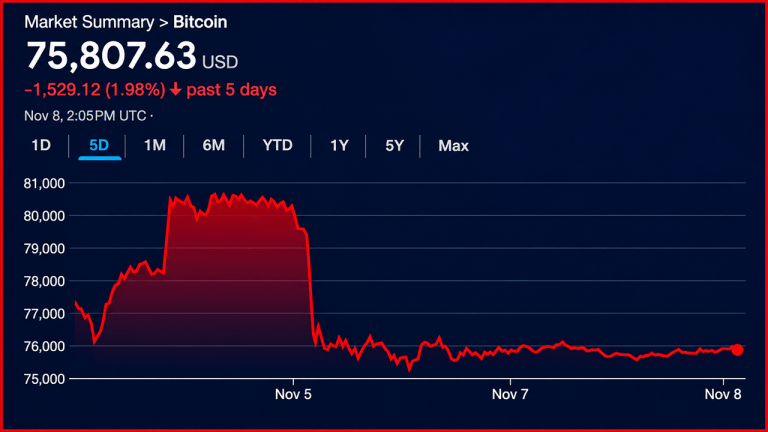
The cryptocurrency market gave back a sharp early-week advance during the first week of November, highlighting the sector’s continued sensitivity to broader risk sentiment. Digital assets initially added roughly $100 billion to their combined market value after the U.S. midterm elections, but the recovery proved short-lived as a sell-off in global technology stocks spread pressure across financial markets.
Bitcoin and XRP were among the major cryptocurrencies to retreat as the market reversed course. The declines erased much of the rally that had lifted digital assets at the start of the week and left investors reassessing whether the post-election move represented a durable shift in sentiment or merely a temporary burst of risk appetite.
The market’s performance followed a familiar pattern. Optimism surrounding the election outcome encouraged buying across higher-risk assets, with cryptocurrencies benefiting from the same improvement in sentiment that supported other parts of the financial system. As the week progressed, however, weakness in technology shares changed the tone. Investors became more cautious, and the resulting reduction in demand for risk-sensitive assets weighed on crypto prices.
Because Bitcoin is the largest digital asset by market value, movements in its price often have an outsized effect on the broader market. A decline in Bitcoin can reduce the total value of the crypto economy even when individual tokens experience different levels of selling. It can also influence trading behavior elsewhere in the sector, as investors reassess exposure to smaller or more volatile assets.
XRP’s decline added to the pressure on the market’s large-cap cryptocurrencies. Like other widely traded digital assets, XRP can be affected by broad market positioning as well as factors specific to its own ecosystem. During periods of heightened volatility, however, macroeconomic developments often take precedence over individual token narratives. Traders may reduce exposure across multiple assets at once rather than distinguish between projects on the basis of separate fundamentals.
The reversal also underscored the close relationship that has developed between crypto and global equity markets. Digital assets were once frequently treated as a separate alternative market, but institutional participation and the growth of crypto-linked investment products have tied price movements more closely to changes in interest rates, liquidity and investor confidence. When technology stocks weaken, cryptocurrencies can face similar selling as portfolio managers limit risk or raise cash.
That relationship does not mean crypto prices always move in lockstep with equities. Digital assets remain capable of producing independent rallies and sharp corrections, driven by regulatory developments, network activity, market positioning and changes in demand. The events of the week nevertheless demonstrated that broader financial conditions can quickly overwhelm market-specific optimism.
The early advance following the U.S. elections had lifted hopes that political developments might improve the outlook for risk assets. The subsequent retreat showed how quickly those expectations can be challenged by events elsewhere. A favorable domestic catalyst was not enough to protect the crypto market once the global technology sell-off became the dominant influence on trading.
Market capitalization is an important measure of this shift because it captures the combined value of cryptocurrencies rather than the performance of a single coin. The addition of approximately $100 billion during the first part of the week suggested a broad improvement in buying interest. Its later disappearance indicated that the recovery lacked sufficient momentum to withstand renewed selling. The change did not necessarily imply that investors had abandoned digital assets permanently, but it did reveal the fragile nature of the advance.
Volatility was therefore a defining feature of the week. Rapid changes in market value can create opportunities for traders, while increasing the risks faced by investors with leveraged positions or short-term strategies. A rally that appears convincing in one session can lose its gains quickly when sentiment turns, particularly in a market that operates continuously and responds immediately to developments in other regions.
For Bitcoin, the retreat placed attention back on its role as the market’s primary direction-setting asset. For XRP, the decline reflected the broader weakness affecting major tokens rather than a separately identified development in the source material. Together, their performance illustrated how quickly selling pressure can spread through the crypto sector when confidence in global risk assets deteriorates.
The week ended with the market still contending with conflicting forces. Election-related optimism had provided an initial boost, but the global technology-stock sell-off proved more influential as trading progressed. Investors are now left to determine whether the lost gains were part of a routine correction within a broader recovery or evidence that the market remains vulnerable to every major shift in global sentiment.

Bitcoin and XRP Slide as Crypto Market Gives Back About $101B in Weekly Reversal

Binance Hack Spurs CZ Warning on AI as STRC Regains Its Peg in Weekly Crypto Recap

Binance Warns Some European Users to Withdraw Crypto Before Year-End Closures and New Fees
-

 Press Releases2 years ago
Gaming Technologies of the New Time!
-

 Altcoins2 years ago
Calls for Enhanced Discussion on Bitcoin as Brazil’s Reserve Asset: A Move Towards ‘Internet’s Gold’
-

 Bitcoin1 year ago
Peter Schiff เตือนนักลงทุนคริปโตขาย Ethereum (ETH) เพื่อซื้อ Bitcoin ชี้ ETH มีศักยภาพจำกัด
-

 Altcoins2 years ago
Bybit announces it will stop withdrawing services in France from January 8, 2025 after regulatory changes
-

 Altcoins2 years ago
Bitcoin Declines Below $80K: deVere CEO Nigel Green Remains Bullish on Long-Term Outlook Following Strategic U.S. Bitcoin Reserve Announcement
-

 Altcoins2 years ago
FBI เชื่อมโยงนักแสดงเกาหลีเข้ากับการแฮ็ก DMM Exchange มูลค่า 308 ล้านดอลลาร์
-

 Bitcoin2 years ago
Bitcoin Surges Past $64K as SEI and POPCAT Lead Daily Crypto Gains on September 25
-

 Bitcoin2 years ago
Bitcoin ETF ประสบปัญหาใหญ่ออกเงินสูงถึง 1 พันล้านดอลลาร์ในวันเดียว